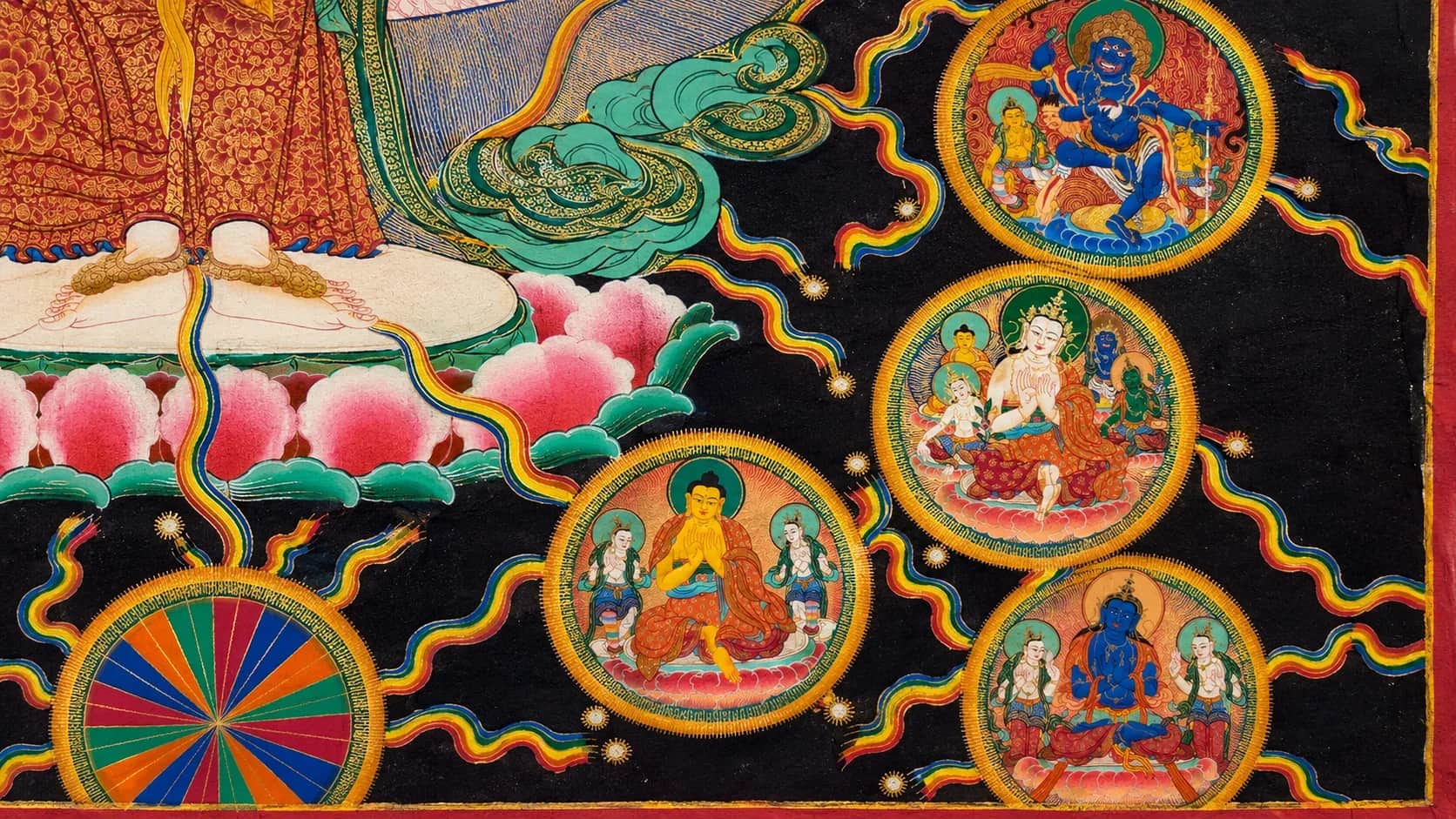
What Is a Thangka Used For? Teaching, Meditation and Ritual
More than decorative art, a thangka serves as a working spiritual tool in Tibetan Buddhism. Used for deity visualization, teaching core philosophy, and ritual offerings, these sacred scrolls embody enlightened presence. Discover how to choose, place, and use a thangka respectfully in your home
By Nepathangka Editorial, Editorial Team
, 10 min read
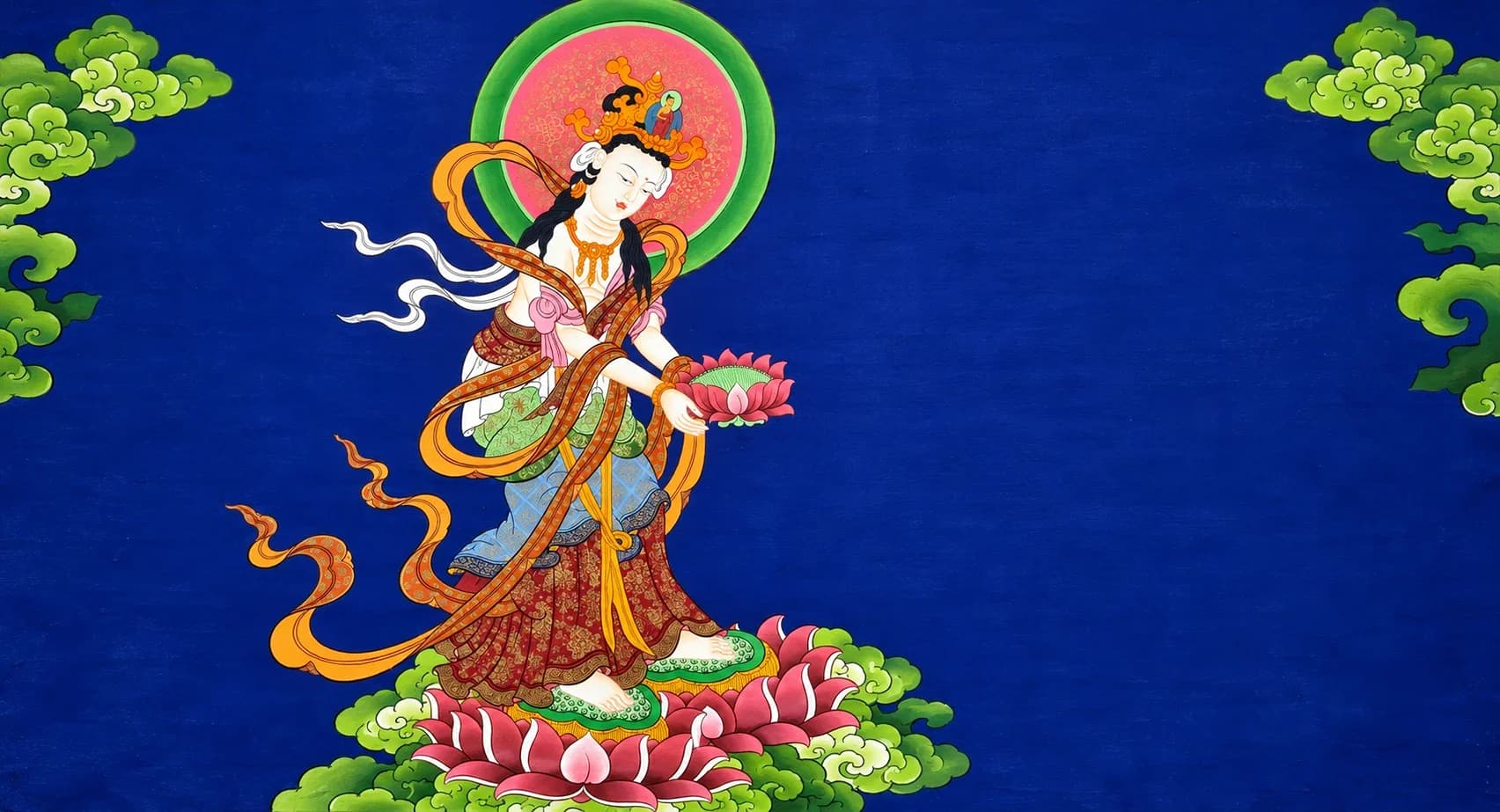
A thangka is more than a religious painting to hang on a wall. In Tibetan Buddhism, it is a working object with several jobs. Practitioners use thangkas to guide visualization in meditation. Teachers use them to explain ideas like rebirth and karma. Families commission them to create merit for the sick or the dead, and monasteries unroll giant thangkas at festivals so crowds can receive their blessing. This article explains each of these uses in practice, shows which subjects suit which purposes, and offers practical guidance on choosing, placing and using a thangka at home.
The Short Answer
Thangkas are traditional Tibetan Buddhist paintings used for several important purposes:
- Meditation: They provide a precise visual reference for visualizing a Buddha or deity.
- Teaching: They help explain Buddhist teachings, stories, and philosophical concepts.
- Ritual and Merit: Consecrated thangkas are placed on shrines and commissioned for healing, protection, or the benefit of the deceased.
- Public Devotion: They are displayed during religious festivals, where viewing them is considered a source of blessing.
Many thangkas serve more than one of these purposes at the same time.
Thangkas as a Support for Meditation
Visualizing a Deity
In Vajrayana Buddhism, an important meditation practice involves visualizing an enlightened figure in precise detail. This includes the figure's body color, number of faces and arms, posture, hand gestures, ornaments, objects held, throne, and surroundings. This practice is often called deity yoga.
A thangka helps practitioners develop this detailed mental image. They study the painting with their eyes open, focusing on one part at a time, and then close their eyes to recreate the image mentally. When the visualization becomes unclear, they look at the painting again.
Over time, practitioners work toward maintaining a steady visualization without needing to look at the painting.
Accuracy is essential to this process. Thangka painters follow traditional rules of proportion and iconography because an incorrect gesture, color, or symbol could lead to an incorrect visualization.
Refuge Trees and Preliminary Practices
A refuge tree, sometimes called a merit field, depicts a lineage of spiritual teachers, Buddhas, deities, protectors, and scriptures gathered around a symbolic tree or cloud.
These paintings are closely associated with ngöndro, the preliminary practices that many Tibetan Buddhist students undertake early in their training.
Practitioners may perform prostrations before a refuge tree thangka while visualizing the assembly of enlightened beings represented in the painting.
Mandalas and Initiation
Mandala thangkas depict the pure realm of a particular deity, often represented as a precise geometric palace viewed from above.
These paintings are used in meditation and during empowerments, which are initiation ceremonies in which a lama introduces students to a specific deity practice.
Understanding a mandala generally requires the relevant teachings. For this reason, practitioners often study and use mandala thangkas under the guidance of a qualified teacher.
Thangkas as Teaching Tools
The Wheel of Life
The Wheel of Life, known as Bhavachakra, is one of the most recognizable teaching thangkas.
It is traditionally held in the grip of a fearsome figure representing impermanence. At the center, a pig, a snake, and a bird symbolize ignorance, hatred, and greed. The surrounding sections illustrate the realms of rebirth, while twelve scenes around the outer rim represent dependent origination—the process through which suffering arises.
Teachers use the Wheel of Life to explain karma, rebirth, impermanence, and the causes of suffering, guiding students through the painting one section at a time.
Versions of the Wheel of Life are also painted as murals near monastery entrances, where visitors can learn from the imagery as they enter.
Stories of the Buddha and Great Teachers
Narrative thangkas illustrate important events from the life of the Buddha, from his birth to his passing. Other paintings depict the lives and teachings of influential Buddhist masters, including Padmasambhava and Milarepa.
Some stories are represented across multiple thangkas, allowing a series of paintings to communicate a longer narrative.
Historically, these paintings also helped communities learn about Buddhist history and teachings in places where literacy was limited.
Travelling Storytellers
For centuries, travelling storytellers known as lama mani moved between Tibetan villages carrying rolled thangkas.
They would hang a painting, point to different scenes with a stick, and sing or recite the story represented in the artwork. These performances often explored karma, devotion, and the consequences of human actions.
The portable scroll format made thangkas particularly useful for travelling teachers and storytellers.
Medicine and Astrology
Some teaching thangkas serve highly specialized educational purposes.
Medical thangkas commissioned in the late seventeenth century by Desi Sangye Gyatso illustrate anatomy, diagnosis, medicinal plants, and treatments described in the Four Tantras of Tibetan medicine. These paintings have been used in the training of physicians.
Astrological and calendrical thangkas have also been created as visual references for teaching and study.
Thangkas in Religious Rituals
Consecration
Consecration is an important ritual through which a thangka becomes a sacred object within a Buddhist tradition.
During the ceremony, a lama performs rituals intended to invite the enlightened presence of the deity into the image. Mantras, commonly represented by the syllables om, ah, and hum, are often written on the back of the canvas behind the figure's forehead, throat, and heart.
After consecration, the thangka is treated as a representation of the enlightened body rather than simply as a painting.
The Shrine
Consecrated thangkas are commonly displayed on or above shrines in monasteries and private homes.
Offerings placed before them may include:
- Bowls of water
- Butter lamps or candles
- Incense
- Flowers
- Food offerings
Practitioners may bow, recite prayers, or meditate before the painting as part of their daily religious practice.
A silk veil often covers the thangka when it is not being viewed or used for practice.
Rites for the Dead
Commissioning a thangka is an important traditional practice associated with death in Tibetan Buddhism.
The weeks following death, commonly counted as 49 days, are understood in Tibetan tradition as a transitional period before rebirth. During this time, families may sponsor religious activities, including commissioning a thangka dedicated to the deceased.
A lama or astrologer may recommend which deity should appear in the painting. The merit believed to arise from creating the image is then dedicated to the person who has died.
Healing, Long Life, and Removing Obstacles
Thangkas may also be commissioned during illness, before difficult undertakings, or when a lama or astrologer advises that a person is facing obstacles.
The deity depicted often reflects the intention behind the commission:
- Medicine Buddha: Associated with healing.
- Amitayus: Associated with long life.
- White Tara: Associated with longevity and well-being.
Commissioning a thangka is itself considered an act of merit, and the completed painting can support ongoing religious practice.
Protector Chapels
Many monasteries have a protector chapel, known as a gönkhang, dedicated to wrathful guardian deities.
Thangkas depicting these protectors are displayed in these chapels. Some are kept covered and shown only on particular occasions.
Because these images have specific religious significance, they are treated with special respect rather than as ordinary decorative artwork.
Thangkas at Festivals and Public Gatherings
Some monasteries own enormous thangkas, often made from appliqué silk, that are displayed only once or a few times each year.
At Drepung Monastery near Lhasa, the unveiling of a giant thangka traditionally marks the opening of the Shoton festival. Similar displays take place at other monasteries in Tibet and the Himalayan region.
In Bhutan, enormous thangkas known as thongdrel are unrolled at dawn on the final day of many tsechu festivals.
The term is commonly translated as “liberation through seeing,” reflecting the belief that viewing the sacred image with faith brings great blessings.
Large crowds gather before sunrise to witness the display. The thangka is rolled up again before sunlight can damage it.
Purposes of Thangkas at a Glance
| Purpose | Typical Subjects | How They Are Used |
|---|---|---|
| Meditation | Buddhas, bodhisattvas, meditational deities | Studied closely and visualized with eyes closed |
| Preliminary practices | Refuge tree | Used for prostrations and refuge prayers |
| Initiation | Mandalas and specific deities | Displayed and explained during empowerments |
| Teaching | Wheel of Life, life of the Buddha, lives of teachers | Explained scene by scene by a teacher or storyteller |
| Technical study | Medical and astrological thangkas | Used for reference and training |
| Rites for the dead | Deities selected by a lama or astrologer | Commissioned as an act of merit for the deceased |
| Healing and long life | Medicine Buddha, Amitayus, White Tara | Commissioned and used in religious practice |
| Protection | Protector deities and Green Tara | Displayed in shrines and protector chapels |
| Public devotion | Giant appliqué thangkas | Unveiled at festivals for blessings |
Choosing a Thangka for a Particular Purpose
If you are choosing a thangka for meditation, religious practice, or a home shrine, the subject is an important consideration. Different Buddhist figures are traditionally associated with different qualities and intentions.
Popular Thangka Subjects and Their Meanings
- Shakyamuni Buddha: Represents the historical Buddha and is a natural central image for a Buddhist shrine.
- Avalokiteshvara (Chenrezig): Associated with compassion and often connected with the mantra Om Mani Padme Hum .
- Green Tara: Associated with swift assistance, protection from fear, and overcoming obstacles.
- White Tara and Amitayus: Associated with long life, health, and longevity.
- Medicine Buddha: Associated with healing of the body and mind.
- Manjushri: Associated with wisdom, learning, and clear thinking; often appreciated by students.
- Vajrasattva: Associated with purification.
- Wheel of Life: Encourages reflection on karma and impermanence and is particularly useful as a teaching image.
If you follow a particular teacher or Buddhist lineage, consider asking which image is appropriate for your practice. Traditional practices involving wrathful protectors and complex mandalas generally require guidance from a qualified teacher.
Using a Thangka at Home
Whether you are a Buddhist practitioner or simply appreciate the artistic and cultural significance of thangkas, a few traditional customs are worth following.
1. Hang It in a Respectful Position
Place the thangka at or above eye level. Avoid placing it directly on the floor or below waist height.
2. Choose a Clean and Calm Location
A quiet, clean space is generally preferred. Avoid locations such as bathrooms, kitchens, and areas near shoes.
3. Protect It from Sunlight and Moisture
Direct sunlight can fade pigments, while damp conditions can damage the canvas. Choose a location that helps preserve the painting.
4. Use the Silk Veil
If your thangka has a silk cover, lower it when you are not viewing or practicing with the painting. The veil helps protect the artwork from dust and light while marking its sacred significance.
5. Consider Consecration
If you intend to use the thangka as a sacred object for religious practice, you may ask a lama or monastery about consecration.
6. Handle Damaged Thangkas Respectfully
If a thangka becomes badly damaged, consider asking a monastery how it should be handled rather than discarding it with ordinary rubbish.
A Simple Way to Begin Meditating with a Thangka
For an introductory exercise, sit comfortably facing the painting. Look at it calmly for a few minutes, beginning with the face and gradually observing the surrounding details.
Then close your eyes and try to recall the image as clearly as possible.
This is only an introduction to attentive observation and visualization. Formal Buddhist visualization practices are traditionally learned from a qualified teacher.
Frequently Asked Questions About Thangkas
Can I Use a Thangka for Meditation If I'm Not Buddhist?
Yes. Many people use thangkas as a focus for calm, attentive observation without following a Buddhist religious practice.
However, treating the painting respectfully is appreciated because thangkas have sacred significance for many Buddhists.
Does a Thangka Need to Be Consecrated?
No, not simply for display. Consecration is important if you want the thangka to function as a sacred object within religious practice or on a shrine.
Many owners consult a lama or monastery about consecrating a thangka after purchasing it.
Where Should a Thangka Be Placed in a Home?
Choose a clean, quiet location at or above eye level. Keep the painting away from direct sunlight, moisture, bathrooms, and the floor.
Many people display thangkas above a shrine or in a dedicated meditation space.
What Thangka Is Best for a Beginner?
Shakyamuni Buddha, Avalokiteshvara, Green Tara, and Medicine Buddha are common first choices.
These subjects are widely practiced and can be appreciated without specialized instruction, although formal religious practices may require guidance.
Why Are Some Thangkas Kept Covered?
A silk veil protects the painting from dust and light while also marking its sacred status.
Thangkas depicting protector deities may be kept covered except during particular ceremonies or designated viewing times.
Is It Disrespectful to Hang a Thangka as Decoration?
Displaying a thangka as artwork is not inherently disrespectful. What matters is how it is treated.
Hanging it in an appropriate place, handling it carefully, and understanding its cultural and religious significance are ways to show respect for the tradition.
Conclusion
Thangkas are much more than traditional Tibetan Buddhist paintings. They serve as tools for meditation, teaching, religious ceremonies, devotional offerings, and public celebrations.
Their detailed imagery communicates Buddhist teachings, supports visualization practices, and preserves important religious and cultural traditions. From a small painting displayed in a home shrine to a monumental silk thangka unveiled at a festival, each has a purpose that extends beyond its artistic beauty.
Understanding these uses helps us appreciate thangkas not only as remarkable works of art but also as meaningful expressions of Buddhist faith, knowledge, and devotion.
About the author: Nepathangka Editorial
Editorial Team
The Nepathangka editorial team writes about thangka painting, Buddhist iconography and Himalayan craft. We work with the painters and metalworkers in Nepal whose pieces we sell, and every guide is checked with the artisans before it goes live.