What Are the Different Types of Thangka Paintings? A Complete Guide
By Nepathangka Editorial, Editorial Team
, 8 min read
Explore the different types of Thangka paintings and understand their subjects, symbolism, artistic styles, and spiritual significance in Tibetan and Himalayan Buddhist traditions.
Thangka paintings are a central part of traditional Himalayan art, known for detailed illustrations, meaningful symbolism, and spiritual themes. From peaceful Buddha images to intricate mandalas and protective deities, each Thangka type represents a different aspect of Buddhist philosophy and artistic tradition. In this guide, discover the different types of Thangka paintings, their meanings, and the unique features that make each one special.
Thangka paintings are among the most distinctive forms of traditional Himalayan Buddhist art. Recognised for their detailed figures, balanced compositions, and symbolic colours, these sacred paintings communicate Buddhist teachings through visual storytelling. They may portray peaceful Buddhas, compassionate Bodhisattvas, protective deities, spiritual teachers, mandalas, and important religious events.
But not every Thangka painting has the same subject or purpose. Some are created as visual supports for meditation, while others explain Buddhist philosophy, represent sacred realms, or preserve the stories of spiritual masters. Understanding the different types of Thangka paintings makes it easier to appreciate the meaning behind their intricate details.
In this complete guide, we explore the main categories of Thangka art, their subjects, symbolism, and traditional styles. For more background, explore the History of Thangka Painting and discover how this traditional art form developed across the Himalayan region.
1. Buddha Thangka Paintings
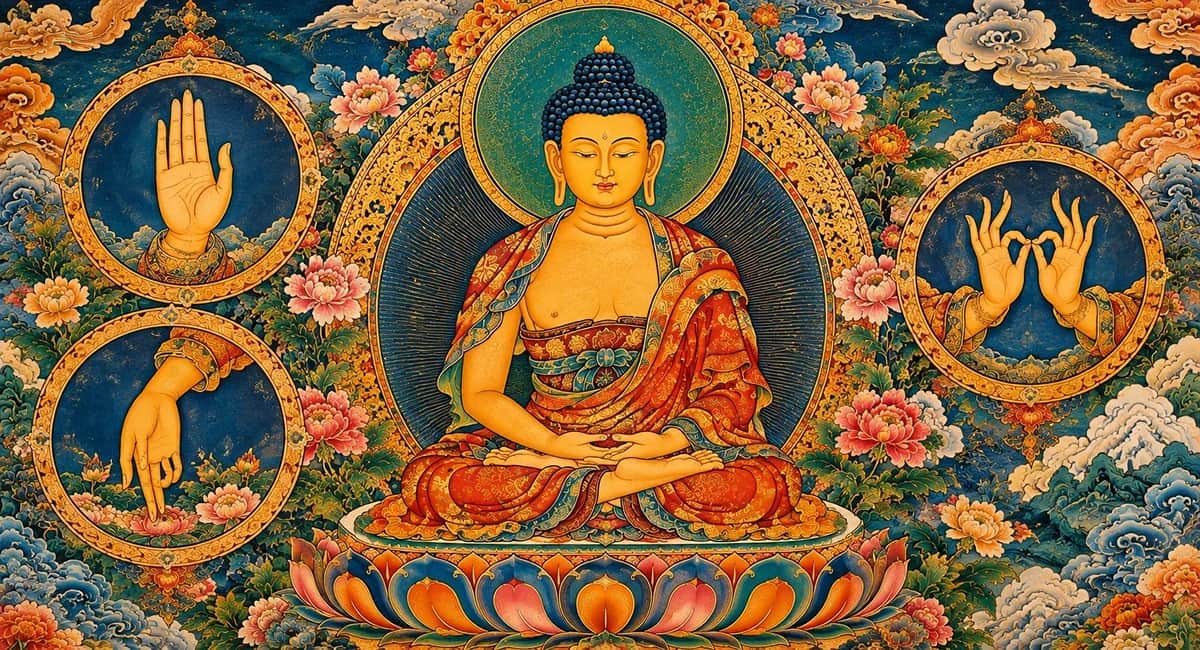
Buddha Thangka paintings feature Shakyamuni Buddha or other Buddhas recognised in Buddhist traditions. Shakyamuni Buddha is commonly shown seated in meditation, with a peaceful expression and symbolic hand gestures known as mudras.
These paintings often communicate ideas such as wisdom, compassion, mindfulness and enlightenment. The posture, hand position, objects, and colours all contribute to the meaning of the image.
Buddha Thangkas are commonly displayed in meditation spaces, Buddhist shrines, and homes where people value their spiritual and artistic significance.
2. Bodhisattva Thangka Paintings
Bodhisattva Thangkas depict enlightened beings associated with compassion, wisdom, and the aspiration to help others. They are often represented with elaborate ornaments, symbolic objects, and distinctive gestures.
Some well-known subjects include:
- Avalokiteshvara: Associated with compassion and the wish to relieve suffering.
- Manjushri: Represents wisdom and is often shown holding a sword that symbolises the cutting of ignorance.
- Vajrapani: Associated with spiritual power and the protection of Buddhist teachings.
The details in each painting help identify the figure and communicate the qualities it represents.
3. Tara Thangka Paintings
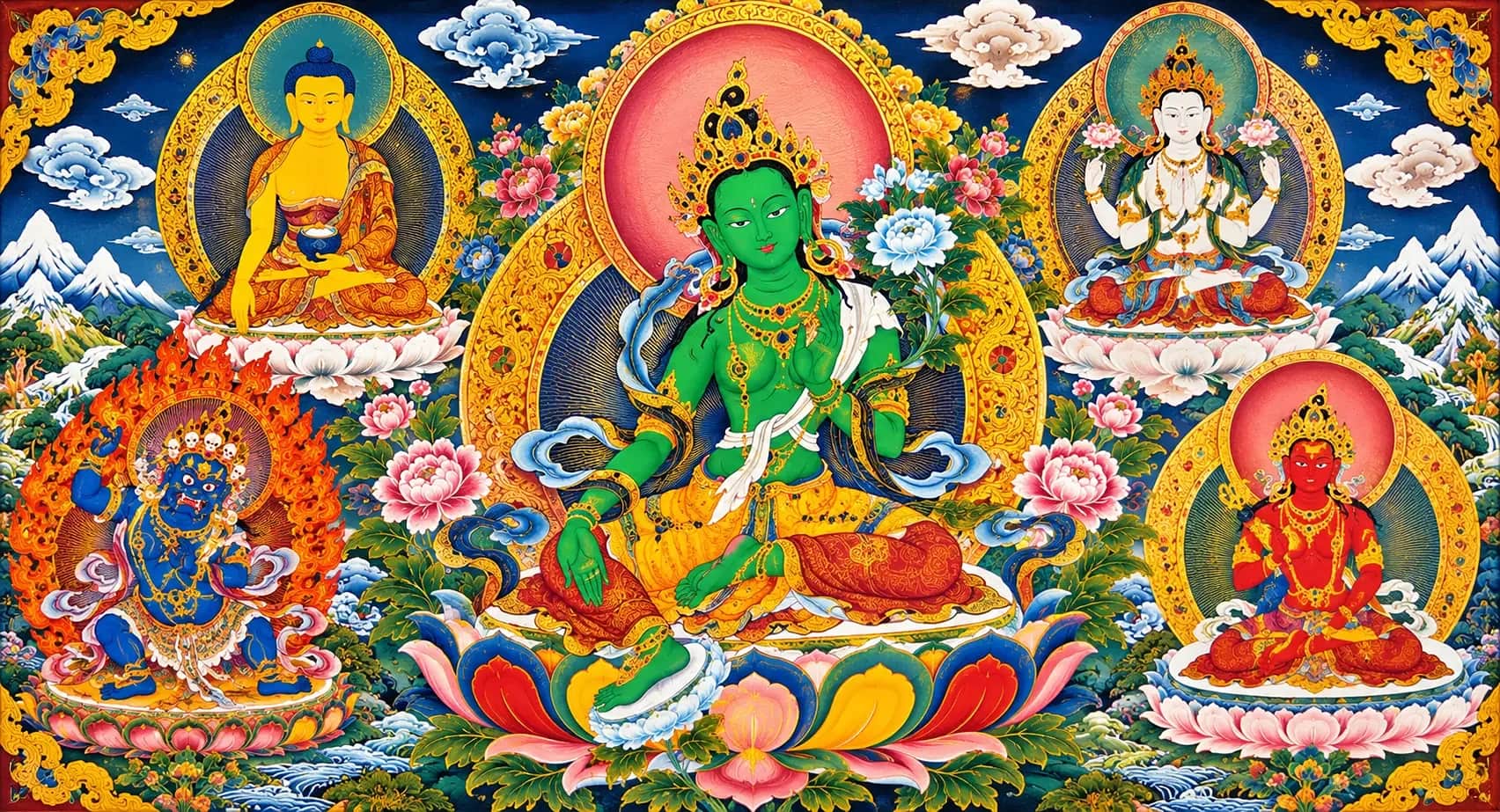
Tara is a widely recognised female figure in Tibetan Buddhist art. Tara Thangkas are especially known for their graceful appearance, symbolic colours, and meaningful hand gestures.
Two commonly depicted forms are:
- Green Tara: Associated with compassionate activity and the swift response to difficulties.
- White Tara: Associated with long life, healing, compassion, and peaceful qualities.
The colours are not simply decorative choices. They help communicate the traditional qualities associated with each form of Tara. These paintings are valued for their artistic detail and their place in Buddhist devotional practices.
4. Mandala Thangka Paintings
Mandala Thangkas feature geometric designs that represent sacred arrangements or realms in Buddhist traditions. They often contain a central deity, surrounding figures, symbolic gates, circles, and carefully organised patterns.
A mandala is more than a decorative circular design. Its arrangement can represent a sacred universe and provide a structured visual support for contemplation and meditation.
Creating a mandala Thangka requires careful planning and precision. Each shape, direction, and symbol has a role within the overall composition. Some mandalas are highly detailed, while others use a simpler arrangement.
5. Deity Thangka Paintings
Deity Thangkas portray different Buddhas, Bodhisattvas, meditational deities, and other sacred figures. These paintings may show a single central figure or several figures arranged in a complex composition.
Deities can be represented in peaceful, semi-peaceful, or wrathful forms. Peaceful figures often have calm expressions and gentle postures. Wrathful figures may have fierce expressions, dynamic poses, and symbolic attributes.
In Buddhist iconography, a wrathful appearance does not simply represent anger. It can symbolise powerful methods for overcoming ignorance, obstacles,s and negative qualities.
6. Protective Deity Thangka Paintings
Protective deity Thangkas depict figures associated with guarding Buddhist teachings and helping practitioners overcome spiritual obstacles.
These paintings often use strong colours, expressive faces, symbolic objects, ts, and dynamic compositions. Some protective figures appear surrounded by flames or other dramatic visual elements.
Their appearance can seem intense, but the symbolism is connected with protection and the forceful removal of obstacles within particular Buddhist traditions.
7. Lineage and Guru Thangka Paintings
Lineage Thangkas represent important teachers, masters, and spiritual figures connected with a particular Buddhist teaching tradition.
A central teacher may appear in the main position, while other masters or lineage holders are arranged around the figure. These compositions visually communicate the transmission of teachings from one generation to another.
Guru and lineage paintings also preserve the memory of respected teachers and help viewers understand the historical connections behind different Buddhist traditions.
8. Narrative and Storytelling Thangka Paintings
Narrative Thangkas illustrate important stories, events, and episodes from Buddhist history and religious literature. Instead of focusing on only one figure, they may contain several scenes arranged within a single painting.
These works can portray events from the life of the Buddha, stories of spiritual masters, ers or other meaningful episodes. Their detailed compositions allow viewers to explore a story through visual elements.
Narrative paintings are also valuable as artistic records because they preserve traditional stories and teachings in a visual form.
9. Wheel of Life Thangka Paintings
The Wheel of Life, also known as Bhavachakra, is a well-known subject in Tibetan Buddhist art. It represents the cycle of existence, commonly described through the concept of samsara.
The painting usually contains several sections that communicate ideas about karma, different realms of existence, and the causes that keep beings within the cycle of suffering.
The Wheel of Life is often used as a teaching image. Its organised structure helps explain complex Buddhist ideas through visual storytelling.
10. Medicine Buddha Thangka Paintings
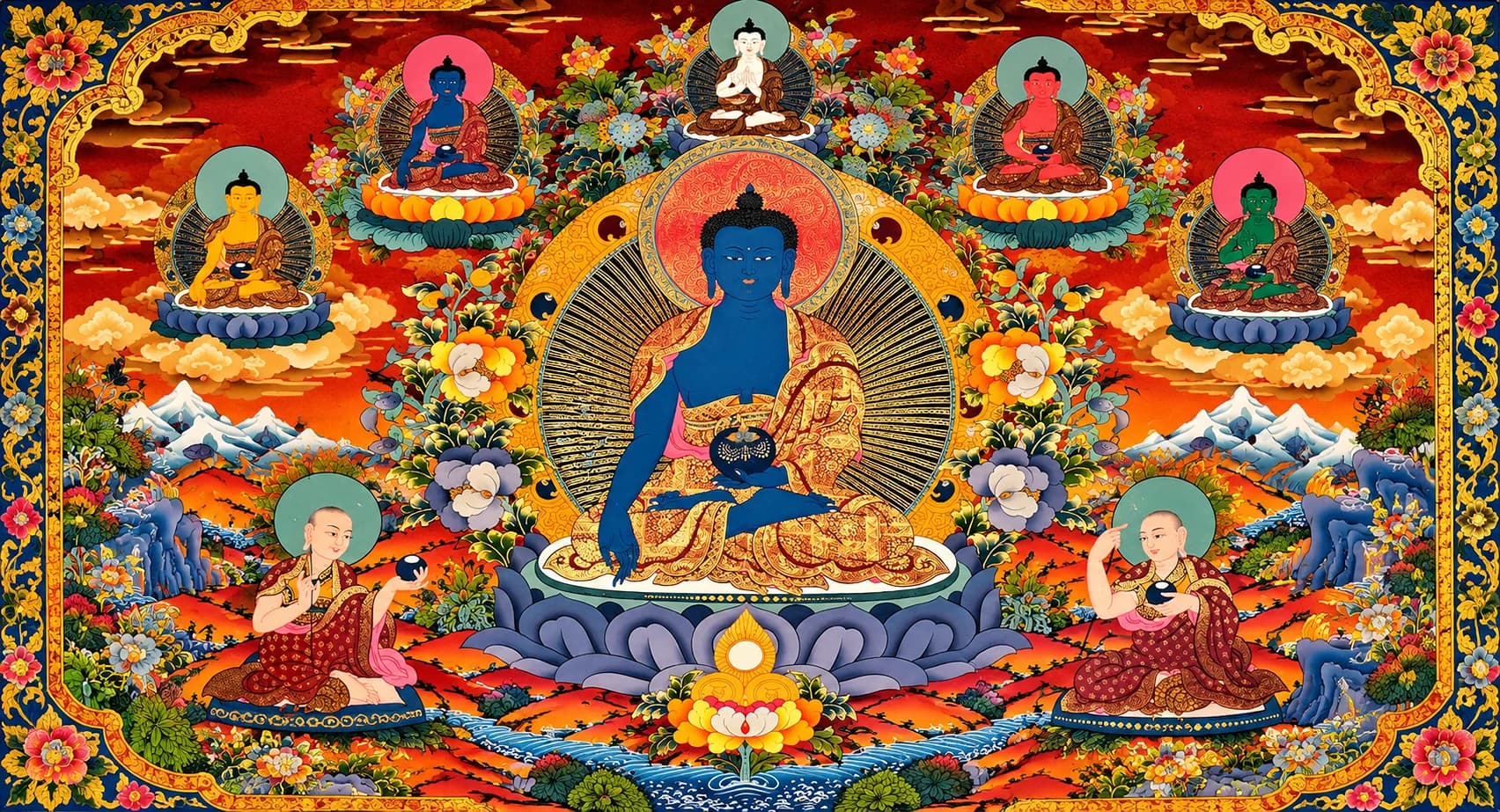
Medicine Buddha Thangkas depict the Buddha associated with healing and the removal of suffering. He is commonly represented with a blue-coloured body and symbolic objects connected with traditional iconography.
These paintings are associated with Buddhist practices concerning healing, well-being, and compassion. Their symbolism reflects the connection between physical suffering, mental states, and spiritual understanding.
Medicine Buddha paintings are appreciated for their calm composition, meaningful colours, and important place in Buddhist devotional art.
11. Background Colour-Based Thangka Paintings
Thangkas can also be classified according to their background colours and painting techniques. These categories describe the visual treatment of a painting rather than only the figure represented.
Some traditional terms include:
- Tson-thang: A coloured Thangka with a painted background.
- Ser-thang: A Thangka using a gold or yellow background.
- Mar-thang or Tsal-thang: A style associated with a red background.
- Nag-thang: A Thangka with a black background, often using colourful or gold details.
The use of gold, red, black, and other colours can create different visual effects and highlight important elements of the composition. The exact treatment varies according to the artistic tradition and the painting.
12. How Are Different Types of Thangka Paintings Created?
Although Thangka subjects and styles vary, traditional painting involves careful preparation and detailed craftsmanship.
Artists commonly begin by preparing and stretching a cloth surface, often cotton. The surface is then treated to create a suitable base for painting. The composition is drawn or transferred onto the prepared canvas, followed by the careful application of colours and fine details.
Traditional Thangka painting follows established iconographic principles. These guidelines help artists maintain the correct proportions, postures, gestures, and symbolic attributes of sacred figures.
Gold may also be used to highlight decorative details. Once the painting is complete, it may be mounted with a textile border for display.
To understand the process in more detail, read our guide on how a Thangka is painted.
Learn more about How a Thangka Is Painted, including the traditional techniques and careful craftsmanship involved in creating these artworks.
13. How to Choose a Thangka Painting
Choosing a Thangka is easier when you understand its subject, artistic style, and intended purpose. Consider the following points before selecting one:
Understand the subject: Learn whether the painting represents a Buddha, Bodhisattva, Tara, mandala, teacher, or another figure.
Explore the symbolism: Look at the colours, gestures, objects, and surrounding details. These elements help explain the meaning of the artwork.
Look at craftsmanship: Examine the precision of the lines, balance of the composition, colour application, and finer decorative work.
Consider the materials: Traditional paintings may use prepared cotton canvas, mineral or other pigments, and gold details. Materials and techniques can differ between artists and workshops.
Learn about its background: Ask about the artist, origin, painting tradition, and any available information about its creation.
If you are exploring traditional Buddhist artwork, learning what a Thangka is used for can also help you understand its cultural and spiritual context.
Read more about What a Thangka Is Used For to understand its role in meditation, Buddhist teaching, and spiritual practices.
Why Are Different Types of Thangka Paintings Important?
Each type of Thangka painting offers a different way to understand Himalayan Buddhist art. Buddha and Bodhisattva paintings communicate spiritual qualities, mandalas represent sacred arrangements, narrative works preserve important stories, and lineage paintings honour the teachers who transmitted Buddhist teachings.
Together, these forms demonstrate how art can preserve philosophy, history, craftsmanship and cultural identity. Their detailed compositions also show the knowledge and patience required to maintain traditional painting practices.
For readers interested in the origins of this art form, our guide to the history of Thangka painting offers further background.
Conclusion
The different types of Thangka paintings reflect the variety and depth of traditional Himalayan Buddhist art. From Buddha, Tara and Bodhisattva images to mandalas, protective deities, lineage paintings and the Wheel of Life, every category has its own visual language and symbolism.
Understanding these categories helps viewers appreciate more than the colours and intricate designs. It provides insight into the stories, teachings, and artistic traditions represented in each painting. Whether you are learning about Buddhist art or exploring traditional Thangka artwork, every painting offers an opportunity to discover a meaningful part of Himalayan cultural heritage.
Explore Authentic Thangka Paintings and discover traditional Himalayan Buddhist artwork.
Explore the Beauty of Authentic Thangka Paintings
Explore Our CollectionFrequently asked questions
Answers to the questions readers ask most about this topic.
The main types include Buddha, Bodhisattva, Tara, Mandala, Deity, Protective Deity, Lineage, Narrative, Wheel of Life, and Medicine Buddha Thangkas.
A Mandala Thangka is a sacred painting featuring geometric patterns and symbolic arrangements that represent a sacred realm in Buddhist traditions.
Green Tara is associated with compassionate activity and responding to difficulties, while White Tara is associated with long life, healing, and peaceful qualities.
A Wheel of Life Thangka represents samsara, the cycle of existence, and illustrates Buddhist concepts such as karma and different realms of existence
Traditional Thangka paintings are commonly created on prepared cotton or textile surfaces using pigments, fine brushes, and sometimes gold details.
About the author: Nepathangka Editorial
Editorial Team
The Nepathangka editorial team writes about thangka painting, Buddhist iconography and Himalayan craft. We work with the painters and metalworkers in Nepal whose pieces we sell, and every guide is checked with the artisans before it goes live.