Understanding Mudras in Buddhist Art: The Meaning Behind Sacred Hand Gestures
By Nepathangka Editorial, Editorial Team
, 8 min read
Explore the meaning of sacred hand gestures in Buddhist art. Learn how mudras such as Abhaya, Dhyana, Bhumisparsha, and Vitarka communicate teachings and spiritual qualities in traditional Thangka paintings.
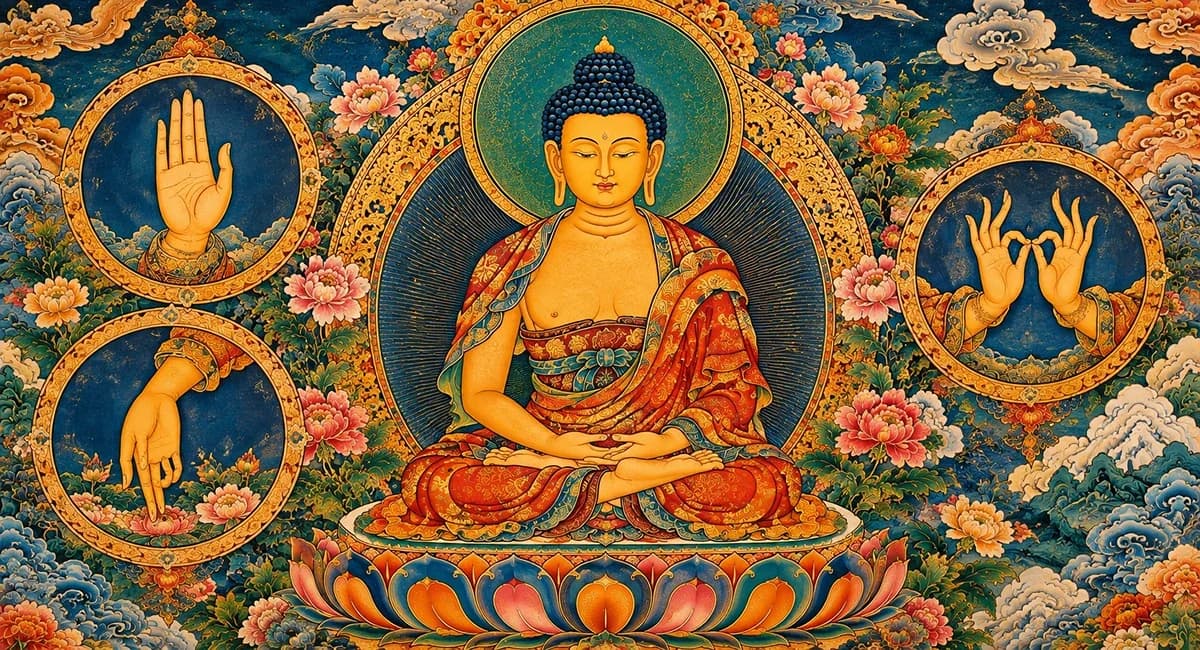
Mudras are meaningful hand gestures used in Buddhist art to communicate spiritual teachings, qualities, and symbolic ideas. From the gesture of fearlessness to the posture of meditation, each mudra adds meaning to the figure represented in a painting or sculpture. Understanding these sacred hand gestures helps viewers interpret Buddhist iconography and appreciate the details of traditional Tibetan Thangka paintings.
Buddhist art communicates spiritual teachings through more than colours, figures, and decorative patterns. One of its most meaningful visual elements is the use of hand gestures known as mudras. These gestures appear in statues, paintings, temple decorations, and traditional Thangka artwork, helping viewers understand the qualities and teachings represented by a sacred figure.
The meaning of mudras in Buddhist art can be seen in the position of the hands and fingers. A raised palm may communicate fearlessness and protection, while hands resting together in the lap can represent meditation and concentration. Other gestures refer to important moments in the Buddha's life or communicate the act of teaching the Dharma.
Understanding these sacred hand gestures makes it easier to interpret traditional Buddhist images. This guide explores some of the most recognised mudras, their meanings and their importance in Tibetan Buddhist and Himalayan art.
1. What Are Mudras in Buddhist Art?
The Sanskrit word mudra is commonly translated as a seal, sign, or symbolic gesture. In Buddhist art, mudras are specific positions of the hands and fingers that communicate particular ideas, spiritual qualities, or important events.
They are commonly found in representations of Buddhas and Bodhisattvas. Each gesture contributes to the identity and meaning of the figure. For example, a Buddha touching the ground with the right hand is often represented in the Bhumisparsha Mudra, associated with the moment of enlightenment.
Mudras are not simply decorative hand positions. They form part of Buddhist iconography, a visual language that helps communicate religious teachings through images.
The exact interpretation and appearance of a mudra can vary across Buddhist traditions, regions, and artistic periods.
2. Why Are Hand Gestures Important in Buddhist Art?
Hand gestures make important Buddhist teachings recognisable through visual form. They can communicate compassion, generosity, protection, meditation, wisdom, and the sharing of knowledge.
In traditional paintings, the position of a deity's hands can help viewers identify the figure and understand the subject of the artwork.
Mudras also connect Buddhist images with stories from the Buddha's life. Certain gestures refer to significant events, such as the Buddha's enlightenment or his first teaching.
In Thangka paintings, artists carefully represent these gestures according to established iconographic conventions. Even a small difference in finger position or hand placement can affect the interpretation of an image.
3. Abhaya Mudra: The Gesture of Fearlessness
Abhaya Mudra is one of the most recognisable gestures in Buddhist art. It is generally shown with one hand raised, palm facing outward and fingers extended.
The gesture communicates fearlessness, reassurance, peace, and protection. It can be understood as a symbolic message that there is no need to be afraid.
In many Buddhist images, the Buddha uses this gesture to express reassurance and compassionate protection. It is also associated with Amoghasiddhi in certain Five Buddha Family iconographic systems.
When you see a Buddha figure with an open palm raised near shoulder level, it may be an example of Abhaya Mudra.
4. Dhyana Mudra: The Gesture of Meditation
Dhyana Mudra represents meditation, concentration, and mental stillness. It is commonly depicted with both hands resting in the lap, palms facing upward, with one hand placed over the other.
The thumbs may gently touch, depending on the artistic tradition and representation.
This gesture is frequently seen in seated Buddha figures. It communicates a state of focused awareness and contemplative practice.
Dhyana Mudra is also associated with Amitabha in certain Five Buddha Family traditions. In Thangka paintings, it is especially recognisable in calm, seated representations of the Buddha.
The gesture reminds viewers of the importance of meditation and the cultivation of inner awareness.
5. Bhumisparsha Mudra: The Earth-Touching Gesture
Bhumisparsha Mudra is one of the most meaningful gestures in Buddhist iconography. The right hand reaches down over the knee, with the fingers touching or pointing towards the earth. The left hand generally rests palm-up in the lap.
This gesture represents the moment when Siddhartha Gautama called the earth to witness his awakening beneath the Bodhi tree.
According to the traditional account, as he faced the challenges presented by Mara, he touched the earth to call it as a witness to his spiritual achievement.
The gesture therefore represents enlightenment, determination, and the overcoming of obstacles. It is also associated with Akshobhya in certain Five Buddha Family traditions.
6. Dharmachakra Mudra: The Gesture of Teaching
Dharmachakra Mudra represents the turning of the Wheel of Dharma, or the sharing of the Buddha's teachings.
It is commonly depicted with both hands held near the chest. The fingers and thumbs form distinctive arrangements that create a wheel-like symbolic shape.
The gesture is strongly associated with the Buddha's first sermon at Sarnath, where he taught the Dharma to his first disciples.
In traditional Buddhist paintings, this mudra communicates teaching, wisdom, and the transmission of spiritual knowledge.
It may also be associated with Vairochana in certain Buddhist iconographic systems.
7. Varada Mudra: The Gesture of Generosity
Varada Mudra is commonly known as the gesture of generosity, giving or granting. It is generally represented with the arm extended downward and the palm facing outward, with the fingers pointing towards the ground.
The gesture communicates compassion, generosity, and the willingness to offer help or blessings.
Varada Mudra is associated with Ratnasambhava in certain Five Buddha Family traditions. It may appear in both seated and standing figures.
In some artworks, Varada Mudra is combined with Abhaya Mudra, creating a composition that expresses both protection and generosity.
8. Vitarka Mudra: The Gesture of Discussion and Teaching
Vitarka Mudra is associated with discussion, explanation, and the communication of Buddhist teachings.
It is commonly shown with the thumb and index finger touching to form a circle, while the other fingers remain extended. The gesture is often made with the right hand raised near the chest or shoulder.
The circle formed by the fingers is associated with the transmission and explanation of the Dharma.
Vitarka Mudra can look similar to Dharmachakra Mudra, but the position of the hands and the overall composition help distinguish the two.
It is an important gesture for understanding images in which the Buddha or a Bodhisattva appears to be explaining a teaching.
9. Anjali Mudra: The Gesture of Respect and Reverence
Anjali Mudra is formed by bringing the palms together, usually in front of the chest. It is commonly associated with respect, greeting, devotion, and reverence.
In Buddhist art, this gesture may be shown by disciples, Bodhisattvas, attendants, and other figures expressing respect towards a Buddha or spiritual teacher.
It can also appear in devotional and ceremonial settings.
Anjali Mudra is not exclusive to Buddhism. It is found in several South Asian religious and cultural traditions, making its wider context important when interpreting an image.
10. How Mudras Help Identify Figures in Thangka Paintings
Mudras are useful visual clues when identifying the subject of a Thangka painting. They can help viewers distinguish between different Buddhas, Bodhisattvas, and other sacred figures.
For example, a seated Buddha touching the earth may represent the enlightenment of Shakyamuni. A figure with both hands in the lap may be shown in a meditative posture, while a raised open palm may communicate fearlessness.
However, hand gestures alone should not identify a figure. The colour, posture, ornaments, symbolic objects, throne, and surrounding composition also matter.
Traditional artists follow established iconographic guidelines to represent these features consistently.
For a more detailed introduction to interpreting figures and symbols, explore our guide on how to read a Thangka painting.
11. Mudras and the Five Wisdom Buddhas
In some Tibetan Buddhist traditions, mudras are connected with the Five Wisdom Buddhas, also known as the Five Tathagatas.
These five Buddhas are Vairochana, Akshobhya, Ratnasambhava, Amitabha and Amoghasiddhi.
Each is associated with particular colours, directions, qualities and symbolic elements. Certain mudras are also linked with these Buddha figures.
For example, Bhumisparsha Mudra is commonly associated with Akshobhya, while Varada Mudra is associated with Ratnasambhava in established iconographic systems.
These associations provide another way to understand the symbolism found in traditional Buddhist paintings. They also demonstrate how hand gestures work together with colours and other visual attributes.
12. The Role of Mudras in Traditional Thangka Painting
Mudras are an essential part of the artistic language used in many traditional Thangka paintings.
Artists must pay careful attention to the position of the hands, the arrangement of the fingers and the relationship between gestures and the central figure.
A small change in hand position can communicate a different meaning. This is why traditional Thangka painting involves careful study of proportions and iconographic guidelines.
Mudras also contribute to a composition's balance. The position of the hands can guide the viewer's attention towards the central figure and help create a sense of harmony within the artwork.
Learn more about the artistic methods and traditional stages involved in creating these paintings in our article on how a Thangka is painted.
13. How to Understand Mudras When Viewing Buddhist Art
You can begin understanding Buddhist hand gestures by observing a few basic details.
First, notice whether the figure is seated or standing. Then look at the direction of the palms and the position of the fingers.
Ask whether one hand is raised, both hands are resting in the lap, or one hand is touching the earth. These details may help you recognise familiar gestures.
Next, examine the figure's other attributes, including its colour, posture, clothing and symbolic objects. Finally, consider the tradition and subject of the painting before deciding on its meaning.
A thoughtful interpretation combines all these details instead of relying on one gesture alone.
Conclusion
Mudras are an important part of the visual language of Buddhist art. These sacred hand gestures communicate teachings and spiritual qualities through carefully arranged positions of the hands and fingers.
From the fearlessness of Abhaya Mudra and the concentration of Dhyana Mudra to the enlightenment symbolism of Bhumisparsha Mudra, each gesture adds another layer of meaning to Buddhist paintings and sculptures.
In traditional Thangka art, mudras help identify sacred figures, communicate Buddhist teachings, and preserve established iconographic traditions. Learning to recognise them makes it easier to appreciate the artistic detail and cultural significance of Himalayan Buddhist artwork.
Explore the Symbolism of Traditional Buddhist Art
Explore Our CollectionFrequently asked questions
Answers to the questions readers ask most about this topic.
Mudras are symbolic hand gestures used in Buddhist art to communicate spiritual teachings, qualities, and important events from Buddhist tradition.
Abhaya Mudra represents fearlessness, reassurance, peace, and protection. It is generally shown with one hand raised and the palm facing outward.
Dhyana Mudra represents meditation, concentration, and inner awareness. It is commonly shown with both hands resting in the lap, palms facing upward.
Bhumisparsha Mudra represents the Buddha calling the earth to witness his enlightenment. It is shown with the right hand reaching down towards the ground.
Dharmachakra Mudra is the gesture of teaching and represents the turning of the Wheel of Dharma. It is associated with the Buddha's first sermon at Sarnath.
About the author: Nepathangka Editorial
Editorial Team
The Nepathangka editorial team writes about thangka painting, Buddhist iconography and Himalayan craft. We work with the painters and metalworkers in Nepal whose pieces we sell, and every guide is checked with the artisans before it goes live.