Size
A larger canvas means more area to prime, measure, color, shade and outline.
Time doesn't just grow with size, though. Small thangkas can also be slow, because detail has to be painted at a finer scale with very small brushes.
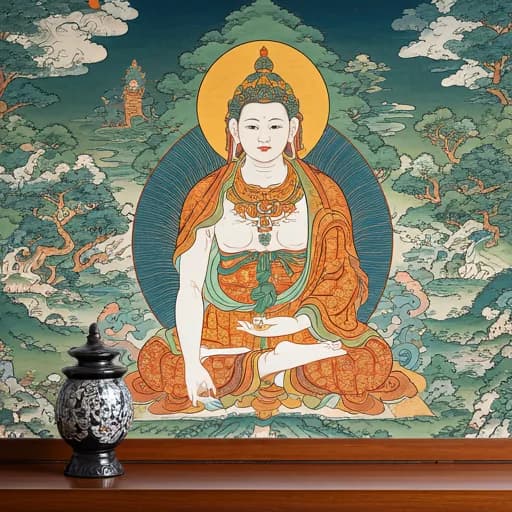
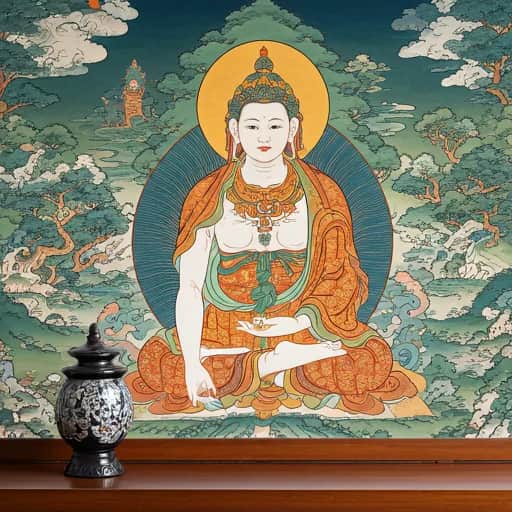
A single Buddha on a lotus throne is a very different job from a refuge tree with dozens of teachers and deities, each with their own posture, attributes and face.
Every added figure means more measuring, more drawing and more faces to paint, and faces are the most demanding part of the work.
Background and Landscape
A plain background is fast to fill.
A full landscape with layered clouds, mountains, water, trees and flowers takes far longer, because each element is shaded and outlined individually.
Dense landscapes, common in Karma Gadri style work, add a great deal of time.
Materials
Traditional mineral pigments have to be ground by hand and mixed with warm glue before use, which takes time that ready-made paints don't.
Real gold is applied, dried and burnished, and patterned or raised gold ornaments take longer still.
Level of Shading and Finish
This is often the biggest single factor.
Fine, many-layered shading on clouds, flowers, robes and skin can take longer than every other stage combined.
Two thangkas with the same drawing can differ by months depending on how thoroughly they are shaded.
The Painter's Experience
An experienced master works with more confidence, but often takes longer overall because their standards are higher.
They will spend time on refinements a less experienced painter might not attempt.
Speed alone says little about skill.
One Painter or a Workshop
In many workshops, a master handles the drawing, faces and the most delicate detail while apprentices prepare canvases, grind pigments and fill in base colors.
This can shorten the calendar time for a finished painting, even though the total hours of work stay much the same.
Season and Weather
Traditional paints and gesso use animal glue as a binder.
Glue-based materials behave differently in cold or damp conditions, and drying times can stretch.
Painters in colder Himalayan regions often plan their work around this.