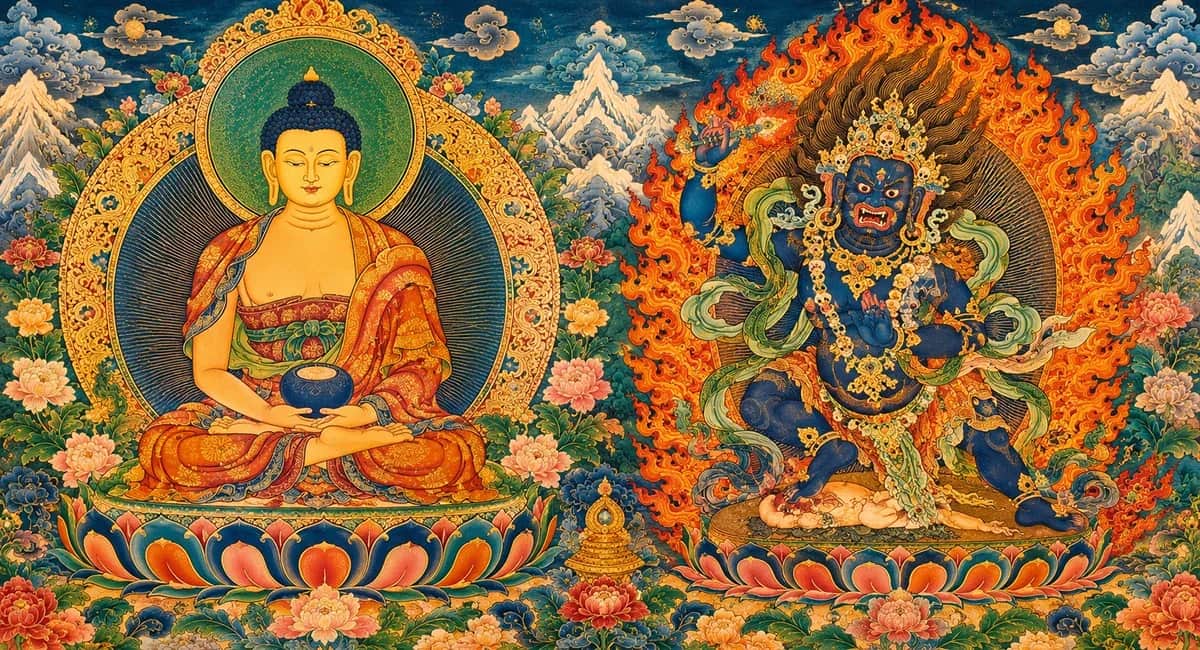
What Are the Different Styles of Tibetan Thangka Painting?
By Nepathangka Editorial, Editorial Team
, 8 min read
Explore the major styles of Tibetan Thangka painting, including Menri, Khyenri, Karma Gardri, and New Menri, and learn how their colours, landscapes, and compositions differ.
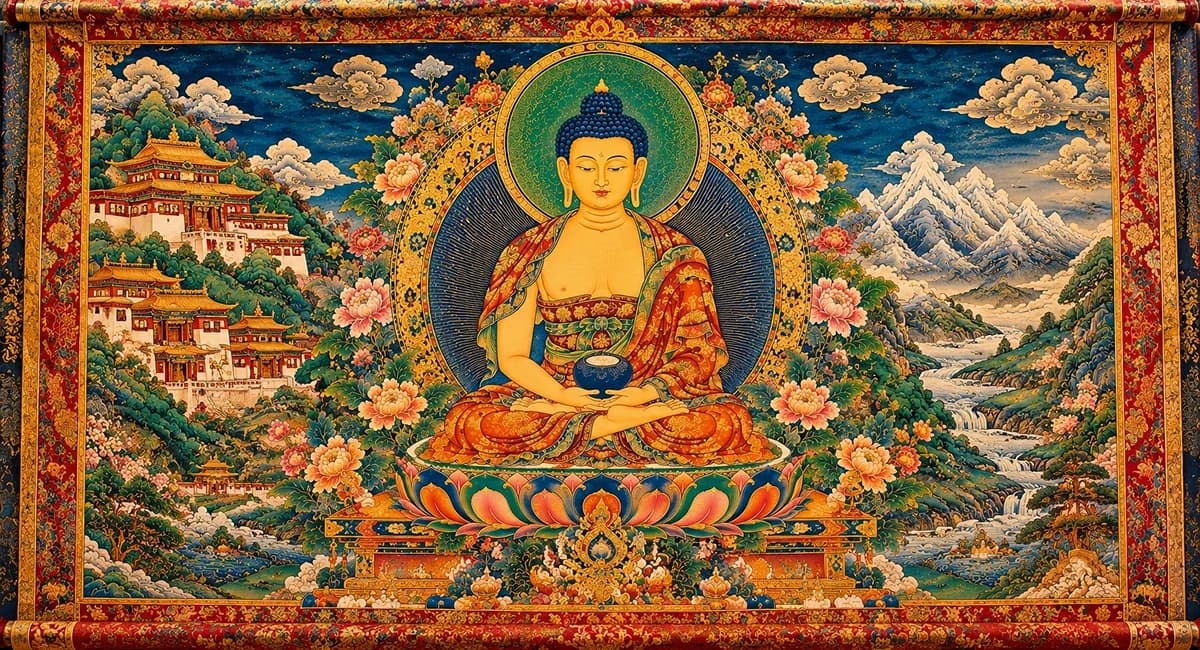
Tibetan Thangka painting includes several artistic traditions shaped by regional communities, master painters, religious lineages, and historical exchange. Styles such as Menri, Khyenri, Karma Gardri, and New Menri can differ in their landscapes, colours, composition, and level of detail. Learning about these traditions helps viewers appreciate the variety and cultural depth of traditional Thangka art.
Tibetan Thangka paintings are recognised for their detailed sacred figures, balanced compositions and rich visual symbolism. Yet not all Thangkas look alike. Across different periods and regions, artists developed distinctive approaches to colour, landscape, line, ornament and the arrangement of figures.
These approaches are often described as painting styles or traditions. Some are associated with renowned artists or monasteries, while others developed within particular regions. Styles also evolved over time, borrowing ideas from neighbouring artistic cultures while preserving established Buddhist iconography.
Understanding the different styles of Tibetan Thangka painting offers a deeper appreciation of the art’s history and variety. This guide introduces several influential traditions, including Menri, Khyenri, Karma Gardri, and New Menri, along with regional developments that show how Thangka painting continued to evolve.
1. What Does “Style” Mean in Tibetan Thangka Painting?
In Thangka art, style refers to the visual characteristics of a painting and the artistic approach behind it. These characteristics may include the treatment of landscapes, use of colour, line quality, figure proportions, composition, and decorative detail.
A painting tradition can be broader than a single style. It may include several related approaches that developed in different places or periods. For this reason, art historians sometimes distinguish between a named style and the wider tradition connected with it.
Thangka styles are not simply different ways of decorating a picture. They developed within Buddhist communities and were shaped by religious subjects, artistic training, patronage and regional exchange.
A painting’s style can offer clues about its historical context, but it should not be used alone to determine its age or place of origin. Artists travelled, works were copied, and traditions influenced one another.
2. Early Influences on Tibetan Thangka Art
Early Tibetan painting drew on artistic traditions from neighbouring regions, including Nepal, Kashmir and parts of India. These influences are visible in the treatment of sacred figures, ornament, colour and composition.
Nepalese artists and artistic practices had a particularly important role in the development of early Tibetan Buddhist painting. Over time, Tibetan artists adapted these influences and developed distinctive local traditions.
From around the fifteenth century, several major painting traditions emerged in central Tibet. They continued to use established Buddhist rules for representing sacred figures while developing different approaches to landscapes and colour.
This history shows that Tibetan Thangka painting was never isolated from its neighbours. It grew through exchange, adaptation, and the work of generations of artists.
3. Menri Style: A Major Central Tibetan Tradition
Menri is one of the most influential traditions in Tibetan painting. It is associated with the fifteenth-century artist Menthangpa Menla Dondrup and became an important model for later painting.
Menri paintings are known for their carefully organised compositions, detailed figures and rich colour. Landscapes often combine Tibetan Buddhist subjects with visual features influenced by Chinese painting, such as mountains, trees, clouds and natural settings.
The central deity or sacred figure usually remains the focus of the composition. Surrounding figures and landscape details are arranged to support the religious subject rather than distract from it.
Menri had a lasting influence on Tibetan painting. Later regional traditions adapted its visual language in different ways, so Menri-related works may vary in palette, detail, and landscape treatment.
4. Khyenri Style: Expressive Figures and Landscape
Khyenri is another important painting tradition that developed in central Tibet during the fifteenth century. It is associated with the artist Khyentse Chenmo.
Khyenri works can show a distinctive approach to figure drawing and landscape. Artists often combine carefully rendered sacred figures with natural settings, using the surrounding landscape to create depth and visual atmosphere.
As with other Tibetan painting traditions, Khyenri continued to follow Buddhist iconographic conventions. The identity, posture, and attributes of the sacred figure remained important, while the artist’s treatment of line, scenery, and composition gave the painting its particular character.
Khyenri is part of a wider history of central Tibetan painting, where artists developed different visual approaches while working within shared religious and artistic frameworks.
5. Karma Gardri Style: Spacious Landscapes and Subtle Colour
Karma Gardri, also written Karma Gadri, developed in the sixteenth century in connection with the Karma Kagyu tradition. It is often associated with the Eighth Karmapa, Mikyö Dorje, and the artist Namkha Tashi.
Karma Gardri paintings are known for spacious compositions, delicate colour, and landscapes influenced by Chinese painting. The scenery may include misty mountains, trees, flowing water, and broad areas of open space.
Compared with some densely detailed styles, Karma Gardri can give the landscape a more prominent role. The central figure remains important, but the surrounding environment can create a sense of openness and quiet depth.
The style continued to develop through later artists and regional centres. Its visual features are especially useful when comparing how different Thangka traditions represent sacred figures within landscapes.
6. New Menri: A Rich and Elaborate Visual Approach
New Menri, also known as Mensar, developed as a later branch of the Menri tradition. It is associated with the seventeenth-century artist Choying Gyatso.
New Menri paintings are often characterised by intricate detail, rich colour and elaborate decorative elements. Compositions may include carefully rendered architecture, ornate textiles, patterned backgrounds and complex landscapes.
The style retained established iconographic systems while developing a more decorative visual treatment. The result can be a densely worked painting in which many small details contribute to the overall richness.
Some regions and historical discussions use the term “New Menri” differently. It is therefore useful to consider the painting’s provenance and context rather than assuming that every richly coloured Thangka belongs to this style.
7. Regional Variations: How Local Traditions Shaped Thangka Art
Tibetan painting developed across a wide area, and regional communities formed their own artistic preferences. Local traditions could differ in landscape, palette, figure proportions, and composition, even when they shared a broader artistic heritage.
New Gardri
New Gardri developed in eastern Tibet. Its landscapes can create a strong sense of depth, with figures appearing smaller in relation to the surrounding environment. Some works leave larger areas of the painting relatively open, giving the composition a spacious quality.
Khamri
Khamri, or Kham style, is associated with the Kham region of eastern Tibet. It can combine rich colour and figure treatment associated with Menri-related painting with landscape and compositional features connected to Gardri traditions.
Amdo and Other Local Traditions
Amdo and other regions supported many local painting communities. Their works could adapt broader Menri-related approaches while developing distinctive palettes and local visual preferences.
These examples show why Tibetan Thangka art should not be reduced to one dominant style. Regional traditions contributed to its diversity and continued to shape its development.
8. How the Styles Differ: A Visual Comparison
The following comparison describes common tendencies rather than fixed rules. Individual paintings can vary according to their date, region, subject, and artist.
| Style or tradition | Common visual characteristics |
|---|---|
| Menri | Rich colour, carefully organised compositions, detailed figures and Chinese-influenced landscapes |
| Khyenri | Distinctive figure drawing and expressive landscape treatment within established iconography |
| Karma Gardri | Spacious compositions, subtle colour and prominent landscape elements |
| New Menri | Elaborate detail, rich decorative treatment and densely worked compositions |
| New Gardri | Deep landscapes, smaller figures in relation to scenery and areas of open space |
| Khamri | A blend of Menri-related colour and Gardri-influenced landscape or composition |
These characteristics are useful starting points, but they are not a checklist that can conclusively identify every painting.
9. What to Look for When Viewing a Thangka
When comparing Thangka styles, begin by looking at the overall composition. Notice how much space the central figure occupies and how the surrounding figures, landscape, and decorative elements are arranged.
Next, observe the landscape. Are mountains, clouds and trees highly detailed, softly rendered or arranged to create a broad sense of depth? Consider whether the scenery is a small background element or an important part of the painting.
Colour is another useful feature. Some paintings use dense, saturated colour and intricate ornament, while others rely on more restrained palettes and open space. The treatment of lines, textiles and architectural details can also help distinguish one visual approach from another.
Finally, remember that the subject matters. A complex mandala, a narrative painting and a single Buddha image may require different compositions, even when they belong to the same tradition.
For more guidance on interpreting sacred figures and visual details, read our article on how to read a Thangka painting.
10. Why Thangka Styles Matter
The study of Thangka styles helps viewers understand how Tibetan Buddhist art developed through time and across regions. Each tradition reflects the work of artists, communities, and patrons who preserved and adapted established visual systems.
Styles also show how artistic innovation can exist alongside continuity. A painter may introduce a new way of rendering a landscape while keeping the sacred figure’s proportions and attributes consistent with Buddhist iconography.
For collectors, students and art enthusiasts, recognising stylistic differences can deepen appreciation of a painting’s history and craftsmanship. It can also encourage careful questions about provenance, date, and regional context.
11. The Role of Artists and Traditional Training
Thangka painting has traditionally been taught through close study and apprenticeship. Artists learn how to prepare the painting surface, create accurate outlines, apply colour and represent sacred figures according to established conventions.
This training helps preserve the iconographic structure of Buddhist images. At the same time, individual artists and regional workshops contribute their own approaches to colour, landscape and detail.
The techniques used to create a Thangka are closely connected with its visual style. Learn more about the materials and stages involved in our guide to how a Thangka is painted.
12. Appreciating the Diversity of Tibetan Thangka Painting
No single appearance defines every Tibetan Thangka. The art includes a range of styles and regional traditions, each shaped by historical exchange, religious practice, and artistic innovation.
Menri, Khyenri, Karma Gardri and New Menri are among the major traditions often discussed in the history of Tibetan painting. Regional developments such as New Gardri and Khamri further demonstrate the variety of artistic approaches.
By looking closely at colour, composition, landscape and figure treatment, viewers can begin to recognise these differences while respecting the complexity of each painting’s history.
Conclusion
The different styles of Tibetan Thangka painting reveal a rich artistic history shaped by master painters, regional communities and centuries of cultural exchange. Menri, Khyenri, Karma Gardri and New Menri each developed distinctive visual characteristics while preserving important Buddhist iconographic traditions.
Regional approaches such as New Gardri and Khamri add further variety to this artistic landscape. Their differences can be seen in the use of colour, the treatment of scenery, the arrangement of figures, and the balance between detail and open space.
Learning about these traditions helps viewers appreciate Thangka paintings not only as sacred images, but also as works of art that preserve a diverse and evolving Himalayan heritage.
Frequently asked questions
Answers to the questions readers ask most about this topic.
Major traditions often discussed include Menri, Khyenri, Karma Gardri and New Menri. Regional approaches such as New Gardri and Khamri also contributed to Tibetan painting’s diversity.
Menri is a major central Tibetan painting tradition associated with the fifteenth-century artist Menthangpa Menla Dondrup. It is known for rich colour, detailed figures, and carefully arranged compositions.
Karma Gardri is often recognised for spacious compositions, subtle colour, and landscapes influenced by Chinese painting. Its scenery can play a prominent role in the overall composition.
New Menri, also known as Mensar, developed as a later branch of the Menri tradition. It is often associated with elaborate detail, rich colour, and decorative complexity.
Regional traditions can differ in their colour palettes, landscapes, composition, and figure treatment. Local artists adapted broader traditions to their own communities and artistic preferences.
About the author: Nepathangka Editorial
Editorial Team
The Nepathangka editorial team writes about thangka painting, Buddhist iconography and Himalayan craft. We work with the painters and metalworkers in Nepal whose pieces we sell, and every guide is checked with the artisans before it goes live.