Understanding Buddhist Iconography: How to Identify Figures in a Thangka Painting
By Nepathangka Editorial, Editorial Team
, 9 min read
Discover the meaning of Buddhist iconography in Thangka paintings. Learn how to identify Buddhas, Bodhisattvas, Tara, and other sacred figures through their gestures, symbols, and traditional artistic details.
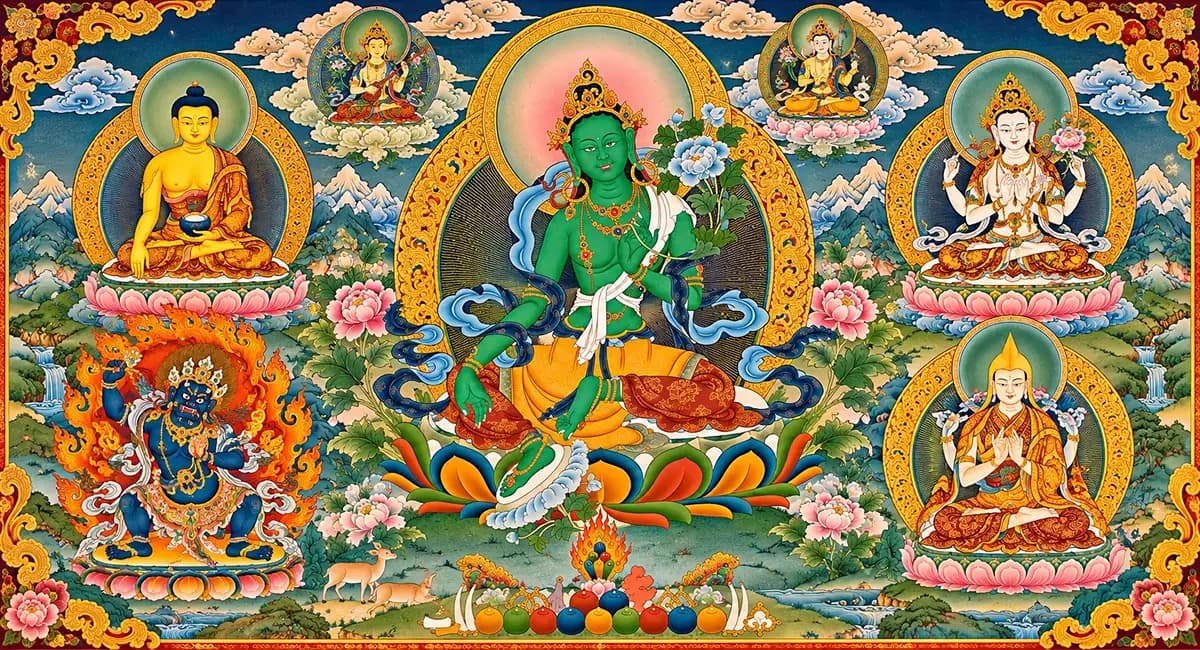
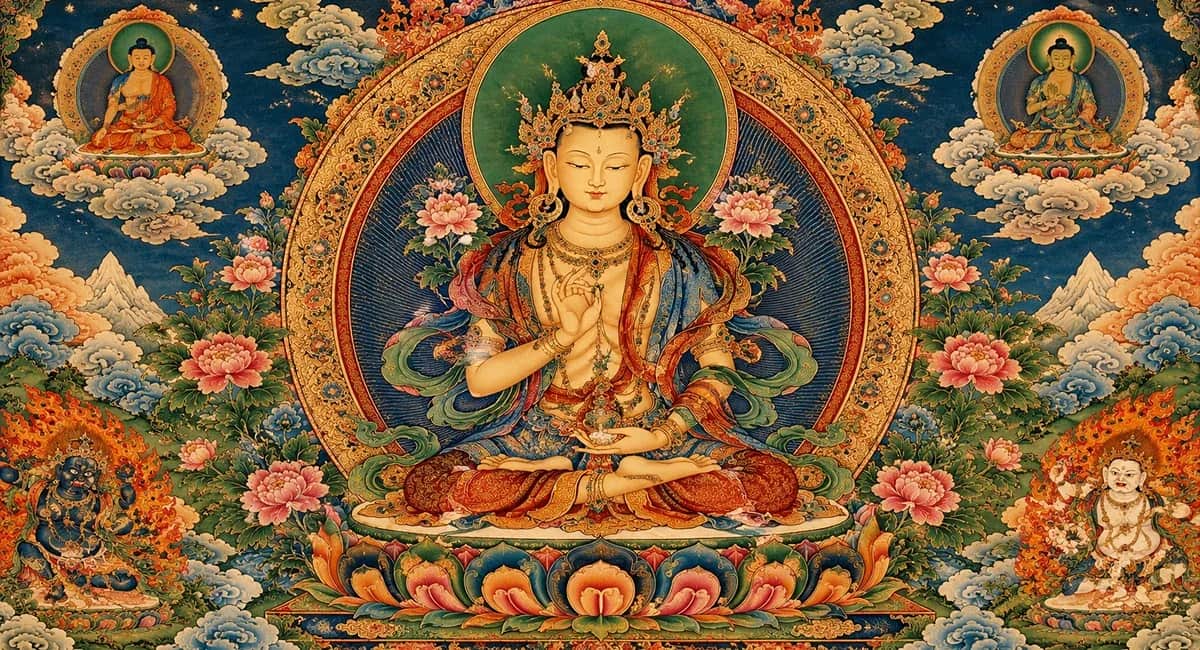
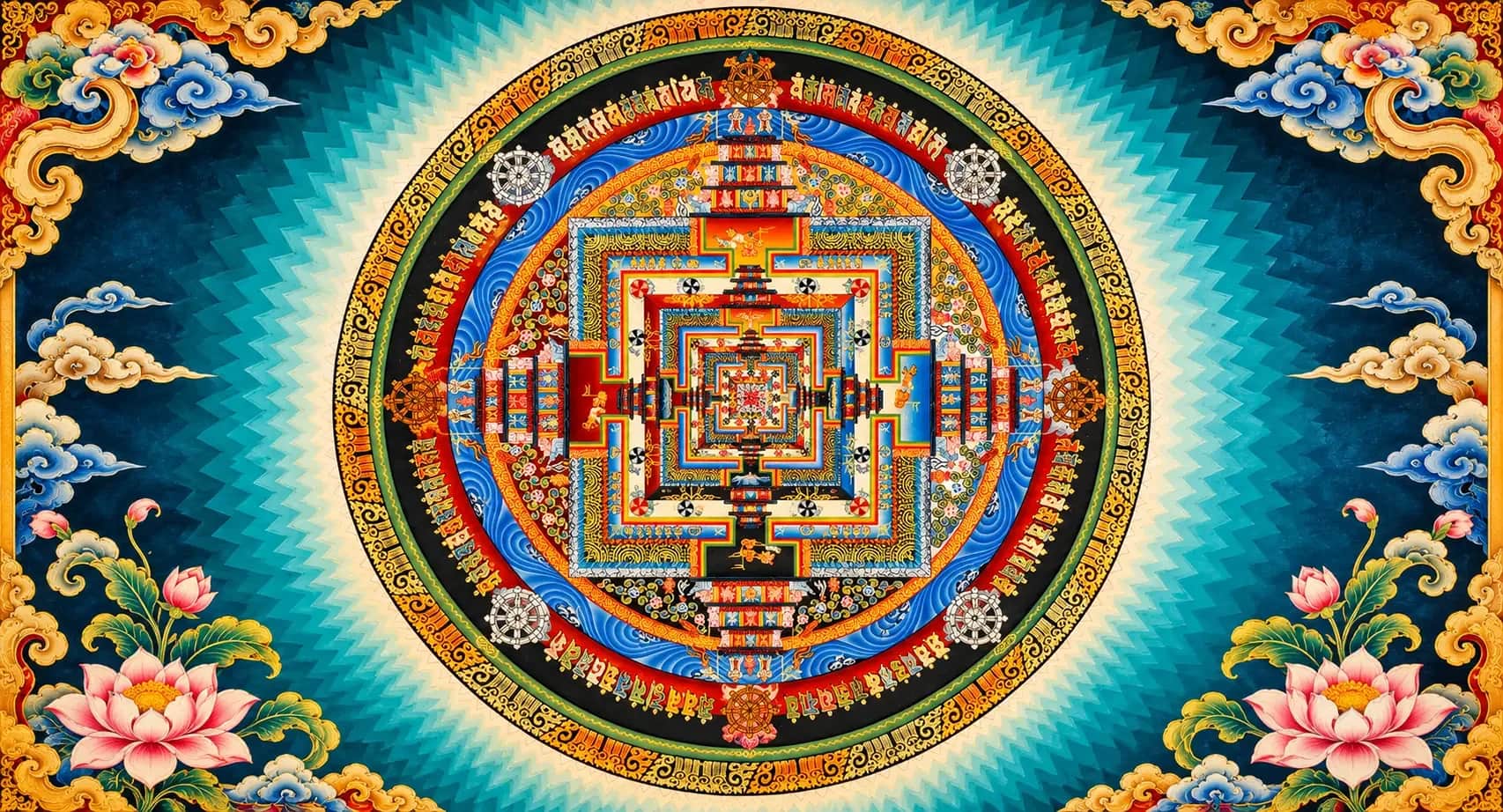
Buddhist Thangka paintings contain a rich visual language of sacred figures, symbolic objects, colours, and hand gestures. Each detail can help viewers understand the identity and qualities of the figures represented. Learning the basics of Buddhist iconography makes it easier to recognise Buddhas, Bodhisattvas, Tara, and other important figures while appreciating the artistic and spiritual traditions behind Thangka paintings.
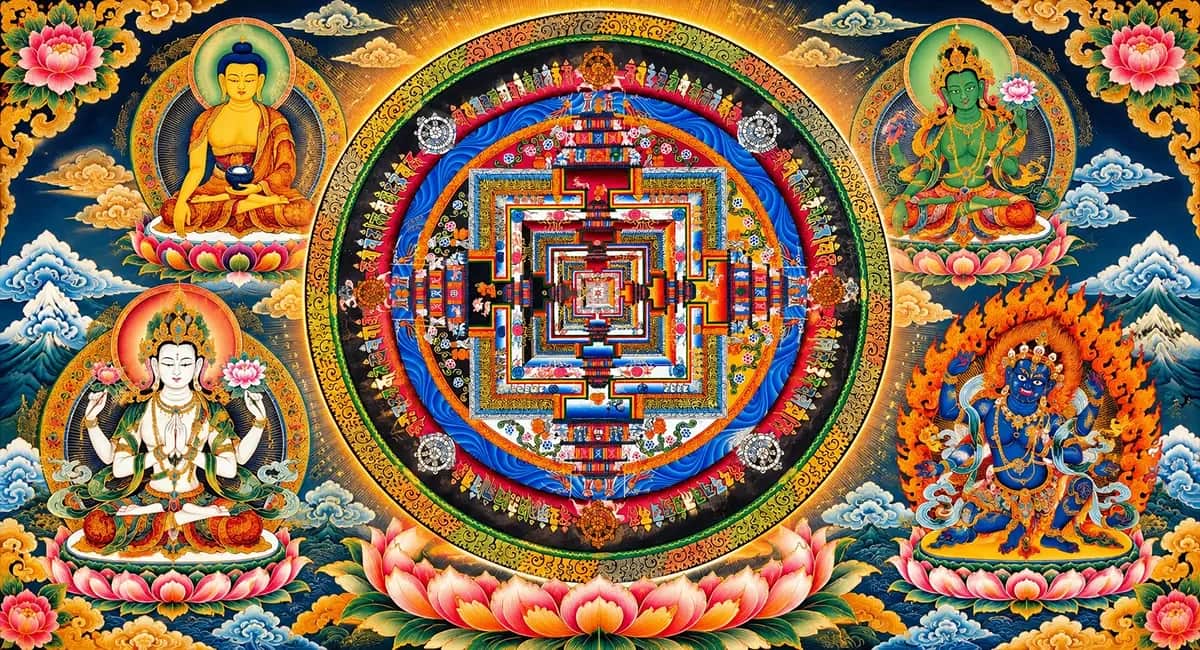
Traditional Thangka paintings are known for their detailed representations of Buddhas, Bodhisattvas, female deities, spiritual teachers, and protective figures. At first glance, these paintings may appear to be filled with similar-looking sacred figures. However, each figure can have distinctive features that communicate its identity, qualities, and place within Buddhist traditions.
The study of these visual features is known as Buddhist iconography. It helps viewers understand the meaning of hand gestures, symbolic objects, body colours, postures, ornaments, and surrounding figures.
Learning how to identify figures in a Thangka painting is not just about recognising faces. It involves observing several visual clues together and understanding how they relate to Buddhist teachings and artistic traditions.
In this guide, we explore the major figures found in Thangka paintings and explain the visual details that can help you recognise them.
1. What Is Buddhist Iconography?
Buddhist iconography is the visual language used to represent Buddhist teachings, sacred figures, and spiritual concepts through art. It includes the traditional ways in which Buddhas, Bodhisattvas, deities and other religious figures are illustrated.
In Thangka paintings, iconography can include:
- Hand gestures, known as mudras
- Body posture and seating position
- Symbolic objects held by figures
- Body colours and facial expressions
- Crowns, jewellery and clothing
- Number of faces and arms
- Thrones, halos and surrounding figures
These details help communicate the identity and qualities of the subject. Traditional artists follow established iconographic conventions so that important figures can be represented in recognisable forms.
2. How to Identify a Buddha Figure
Buddha figures are among the most familiar subjects in Buddhist Thangka paintings. They are commonly shown with peaceful expressions, balanced proportions, and symbolic hand gestures.
Some visual features often associated with Buddha images include:
Monastic robes: Buddhas are generally depicted wearing simple robes rather than elaborate royal jewellery.
Ushnisha: A raised feature on the crown of the head, traditionally associated with the Buddha's wisdom and enlightened state.
Urna: A mark or small curl represented between the eyebrows in many images.
Elongated earlobes: These recall the Buddha's earlier princely life and the renunciation of worldly possessions.
Meditative expression: A calm face and composed posture often communicate concentration and inner peace.
These features are useful clues, but not every Buddha image is identical. Other details, including the hand gesture, colour, and objects, help distinguish particular Buddhas.
3. Shakyamuni Buddha: The Historical Buddha
Shakyamuni Buddha represents Siddhartha Gautama, the historical teacher whose teachings form the foundation of Buddhism.
He is commonly shown seated on a lotus throne, wearing monastic robes. One of his well-known representations features the earth-touching gesture, called Bhumisparsha Mudra.
In this gesture, the right hand reaches down towards the earth while the left hand rests in the lap. It refers to the moment of enlightenment when the earth was called upon to witness the Buddha's awakening.
When identifying Shakyamuni Buddha, look for the combination of a monastic appearance, seated posture, and characteristic gestures rather than relying on one feature alone.
4. How to Recognise Bodhisattvas
Bodhisattvas are important figures in Mahayana Buddhist traditions. They are associated with the aspiration to attain enlightenment and help other beings through compassion and wisdom.
In Himalayan Buddhist art, Bodhisattvas are often represented with crowns, jewellery, ornaments and elegant garments. These features can distinguish them from the simpler monastic appearance commonly associated with Buddhas.
Some well-known Bodhisattvas include:
Avalokiteshvara – The Bodhisattva of Compassion
Avalokiteshvara is associated with compassion and the wish to relieve the suffering of all beings.
Common identifying features may include:
- A lotus flower held in the hand
- A small image of Amitabha Buddha in the crown
- Multiple arms in certain forms
- A peaceful and compassionate expression
Avalokiteshvara appears in different forms, including representations with two, four, or many arms. The number of arms and other attributes can vary according to the specific form.
Manjushri – The Bodhisattva of Wisdom
Manjushri represents wisdom and insight. He is frequently shown holding a flaming sword that symbolises the cutting away of ignorance.
In some representations, he also holds a scripture associated with the perfection of wisdom.
When you see a crowned figure with a sword and a book or scripture, Manjushri may be the subject. However, the complete arrangement should be checked before making a definite identification.
Maitreya – The Future Buddha
Maitreya is recognised as the Buddha who is yet to appear in the future according to Buddhist traditions.
He is often depicted as a richly adorned figure. A water vessel or other traditional attributes may help identify him in particular representations.
His posture and identifying objects can differ between artistic traditions.
5. Understanding Tara Figures in Thangka Paintings
Tara is a widely revered female figure in Tibetan Buddhist traditions. Tara Thangkas are recognised for their graceful appearance, symbolic colours, and meaningful hand gestures.
Two especially well-known forms are:
Green Tara
Green Tara is associated with compassionate activity and responding to difficulties. She is commonly represented with a green body, a peaceful expression, and a seated posture.
Her right hand may extend in a gesture associated with giving or generosity, while a lotus is often shown near her shoulder.
White Tara
White Tara is associated with long life, healing, compassion, and peaceful qualities.
She is commonly represented with a white body. Many traditional images show her with additional eyes, including eyes on the forehead, palms, and soles, symbolising awareness and compassion.
Although Green Tara and White Tara share certain visual characteristics, their colours and specific iconographic details help distinguish them.
6. Recognising Medicine Buddha
Medicine Buddha, also known as Bhaisajyaguru, is associated with healing and the removal of suffering.
In many traditional representations, Medicine Buddha has a blue-coloured body and is shown seated in a meditative posture.
He may hold a medicine bowl in one hand and a medicinal plant in the other. These objects are important clues when identifying the figure.
Medicine Buddha paintings are valued for their connection with healing practices, compassion, and Buddhist teachings.
7. Understanding Protective Deities
Protective deities appear in many forms of Tibetan Buddhist art. They are associated with protecting Buddhist teachings and overcoming spiritual obstacles.
Unlike peaceful Buddhas and Bodhisattvas, some protective figures are represented with fierce expressions, dynamic poses, multiple arms or faces, and dramatic surroundings.
Common visual characteristics may include:
- Fierce facial expressions
- Flames surrounding the figure
- Symbolic weapons or ritual objects
- Dynamic standing or dancing postures
- Multiple heads and arms in certain forms
These features do not simply represent ordinary anger or violence. In their Buddhist iconographic context, they can symbolise powerful methods for overcoming ignorance and obstacles.
It is important to identify a protective deity through its specific attributes and traditional form rather than assuming that every fierce figure represents the same deity.
8. The Importance of Mudras in Identifying Figures
Mudras are symbolic hand gestures used in Buddhist art. They communicate teachings, spiritual qualities, and important moments associated with particular figures.
Some commonly seen mudras include:
Dhyana Mudra – Meditation: Both hands rest in the lap, generally with the palms facing upward. It represents meditation and concentration.
Bhumisparsha Mudra – Earth Touching: The right hand reaches towards the earth. It is strongly associated with the Buddha's enlightenment.
Abhaya Mudra – Fearlessness: The raised hand faces outward and is commonly associated with reassurance, protection, and fearlessness.
Varada Mudra – Giving: The hand extends downward with the palm generally facing outward. It is associated with generosity and the granting of blessings.
Dharmachakra Mudra – Teaching: The hands are positioned near the chest in a gesture associated with teaching the Dharma.
A mudra can provide an important clue, but it should not be used alone to identify a figure. Different figures and traditions may share similar gestures.
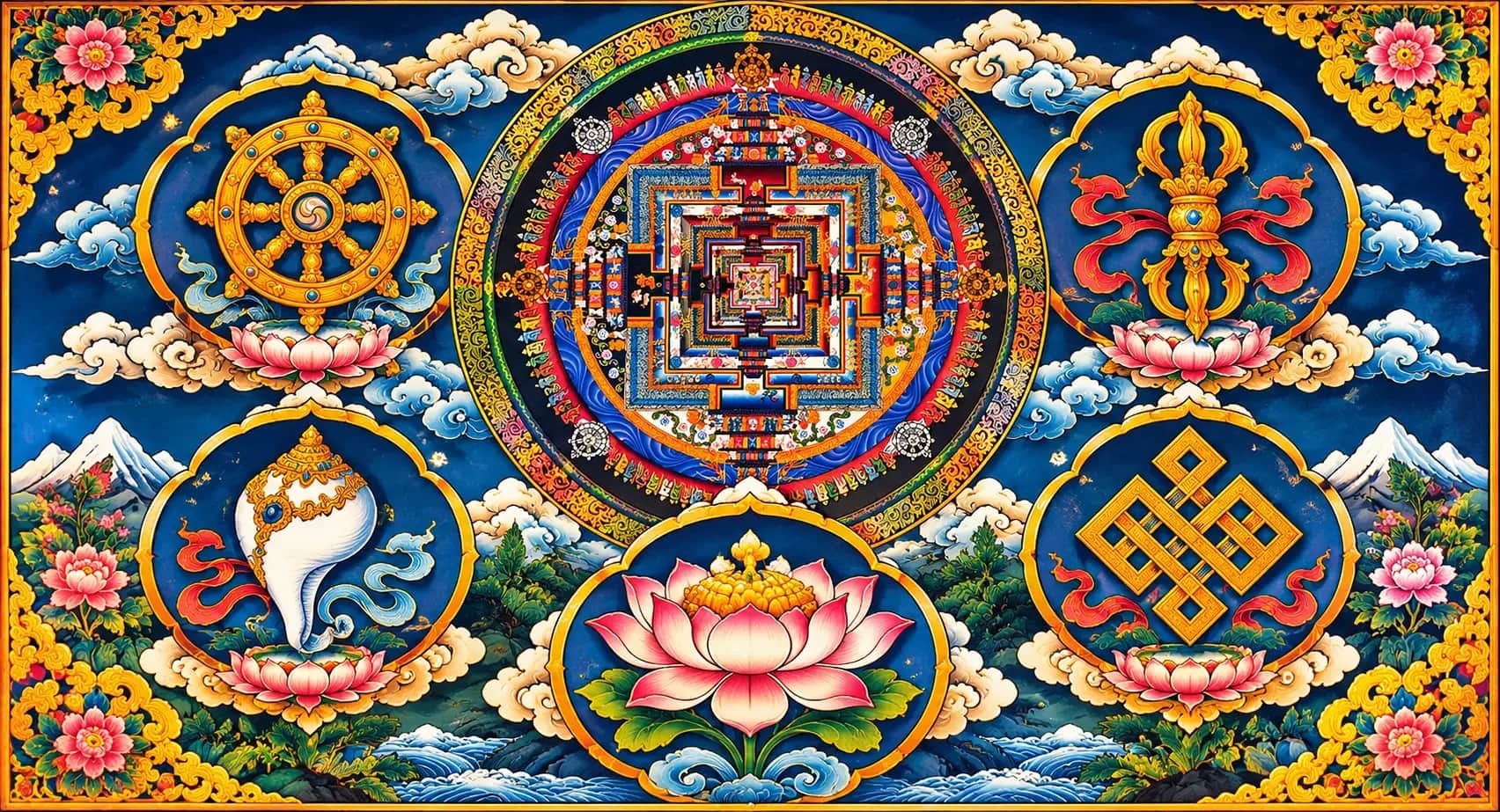
9. Symbolic Objects and Their Meanings
Objects held by sacred figures are another important part of Buddhist iconography. These objects are often called attributes and can help identify a particular deity or Bodhisattva.
Some familiar examples include:
Lotus Flower: Commonly associated with purity and spiritual awakening. It appears in representations of several Buddhist figures.
Vajra: A ritual object associated with indestructible qualities and spiritual power.
Bell: An important ritual object associated with wisdom in Vajrayana Buddhist traditions.
Flaming Sword: Commonly associated with Manjushri and the wisdom that cuts through ignorance.
Book or Scripture: May represent Buddhist teachings and the perfection of wisdom.
Medicine Bowl: A characteristic attribute of many Medicine Buddha representations.
Water Vessel: Appears in certain representations of Maitreya and other figures.
When studying a Thangka, observe which hand holds the object and how it is positioned. These details can provide additional clues about the figure.
10. How Body Colours Help Identify Buddhist Figures
Colour is an important part of traditional Thangka painting. It contributes to the visual balance of the composition and may also communicate symbolic qualities or help identify particular forms.
Some familiar examples include:
- Blue: Associated with figures such as Medicine Buddha in many traditional representations.
- White: Frequently connected with peaceful qualities and White Tara.
- Green: A recognisable feature of Green Tara.
- Red: Appears in different deity forms and can communicate particular symbolic qualities.
- Yellow or Gold: Used in many representations to highlight sacred qualities, richness, and decorative details.
Colour meanings depend on the specific figure and artistic tradition. A blue body or red background alone is not enough to establish a deity's identity.
11. Why Do Some Figures Have Multiple Arms or Heads?
Some Thangka paintings show deities and Bodhisattvas with several arms, faces, or heads. These features are part of established iconographic traditions.
Multiple arms can represent the ability to perform many compassionate or protective activities. Multiple faces or heads may communicate different aspects of awareness, wisdom, or the qualities associated with a particular deity.
For example, certain forms of Avalokiteshvara are shown with many arms to express the extensive reach of compassion.
These figures are not ordinary human portraits. Their unusual appearance communicates symbolic and spiritual ideas.
12. How to Identify Figures in a Thangka Painting Step by Step
If you are looking at a Thangka and want to understand who is represented, follow these simple steps:
- Look at the full composition: Observe the main figure and the surrounding arrangement before focusing on small details.
- Examine the clothing: Notice whether the figure wears simple monastic robes or elaborate ornaments.
- Observe the posture: Check whether the figure is seated, standing, or shown in a dynamic position.
- Study the hands: Identify any familiar mudras.
- Look for symbolic objects: Notice whether the figure holds a lotus, sword, vajra, scripture, bowl, or other attribute.
- Observe the body colour: Use colour as one clue among several.
- Count the faces and arms: Multiple faces or arms may indicate a particular deity form.
- Check the surrounding figures: Attendants, teachers, and other deities can provide useful context.
- Compare with reliable references: Consult museum collections or specialist iconographic resources before confirming an identification.
This approach helps viewers develop a more informed understanding of Thangka paintings without making assumptions based on a single feature.
13. The Artistic and Cultural Importance of Buddhist Iconography
Buddhist iconography plays an important role in preserving the visual traditions of Himalayan art. Through carefully established forms, artists communicate religious teachings, spiritual qualities, and cultural stories.
Thangka paintings also demonstrate the knowledge and craftsmanship required to create traditional Buddhist artwork. Artists must understand proportions, symbolic attributes, colour arrangements, and the visual conventions associated with different figures.
To learn more about the techniques behind these detailed paintings, explore our guide on How a Thangka Is Painted.
You can also read about the History of Thangka Painting to understand how this art form developed across Himalayan communities.
Conclusion
Understanding Buddhist iconography makes it easier to appreciate the figures and meanings represented in traditional Thangka paintings. Buddhas, Bodhisattvas, Tara, Medicine Buddha and protective deities can often be recognised through their clothing, postures, hand gestures, colours and symbolic objects.
However, no single visual detail should be treated as a complete identification. The best approach is to study several features together and consider the painting's wider artistic and religious context.
With careful observation and reliable references, viewers can develop a deeper appreciation of the visual language, craftsmanship, and cultural heritage preserved through Thangka art.
Explore the Meaning and Beauty of Thangka Art
Explore Our CollectionFrequently asked questions
Answers to the questions readers ask most about this topic.
Buddhist iconography is the visual language used to represent Buddhist figures, teachings, and spiritual concepts through symbols, colours, postures, and hand gestures.
Look for features such as simple monastic robes, a peaceful expression, elongated earlobes, the ushnisha, and characteristic hand gestures.
Avalokiteshvara is commonly associated with a lotus flower and a small image of Amitabha Buddha in the crown. Some forms have multiple arms or faces.
Buddhas are commonly represented in simple monastic robes, while Bodhisattvas often wear crowns, jewellery, and elaborate garments. Their symbolic attributes also help distinguish them.
Mudras are symbolic hand gestures that communicate ideas such as meditation, teaching, generosity, protection, and enlightenment.
About the author: Nepathangka Editorial
Editorial Team
The Nepathangka editorial team writes about thangka painting, Buddhist iconography and Himalayan craft. We work with the painters and metalworkers in Nepal whose pieces we sell, and every guide is checked with the artisans before it goes live.