What Is Sacred Geometry in Tibetan Buddhist Art?
By Nepathangka Editorial, Editorial Team
, 8 min read
Discover how circles, squares, symmetry, and mandalas create meaningful designs in Tibetan Buddhist art. Learn how sacred geometry expresses spiritual ideas and represents sacred space in traditional Thangka paintings.
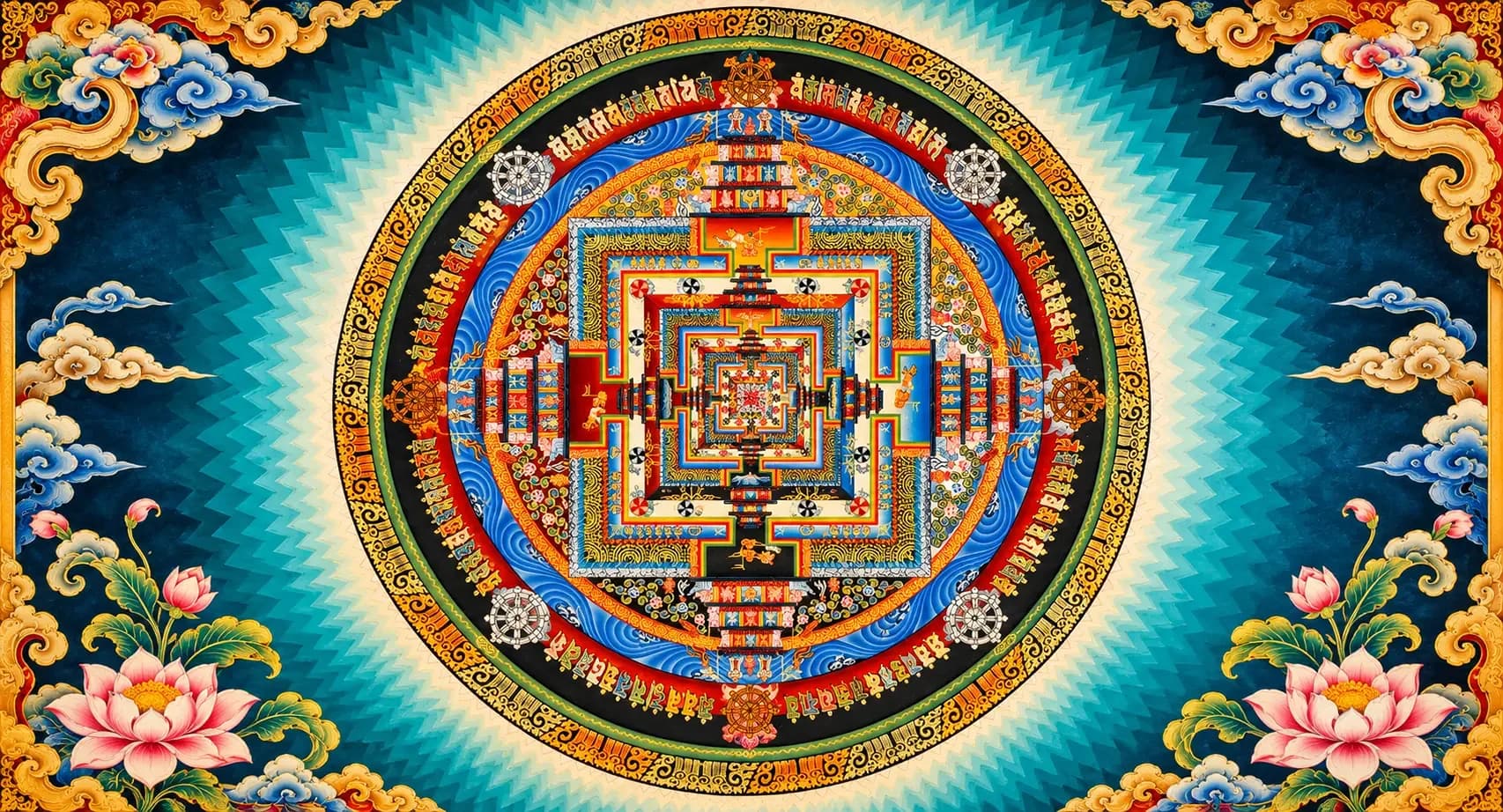
Sacred geometry plays an important role in the visual language of Tibetan Buddhist art. Through carefully arranged circles, squares, symmetrical patterns, and mandalas, traditional artists represent sacred spaces, spiritual teachings, and the structure of Buddhist cosmology. Understanding these geometric elements helps viewers appreciate the deeper meaning and careful design behind traditional Thangka paintings.
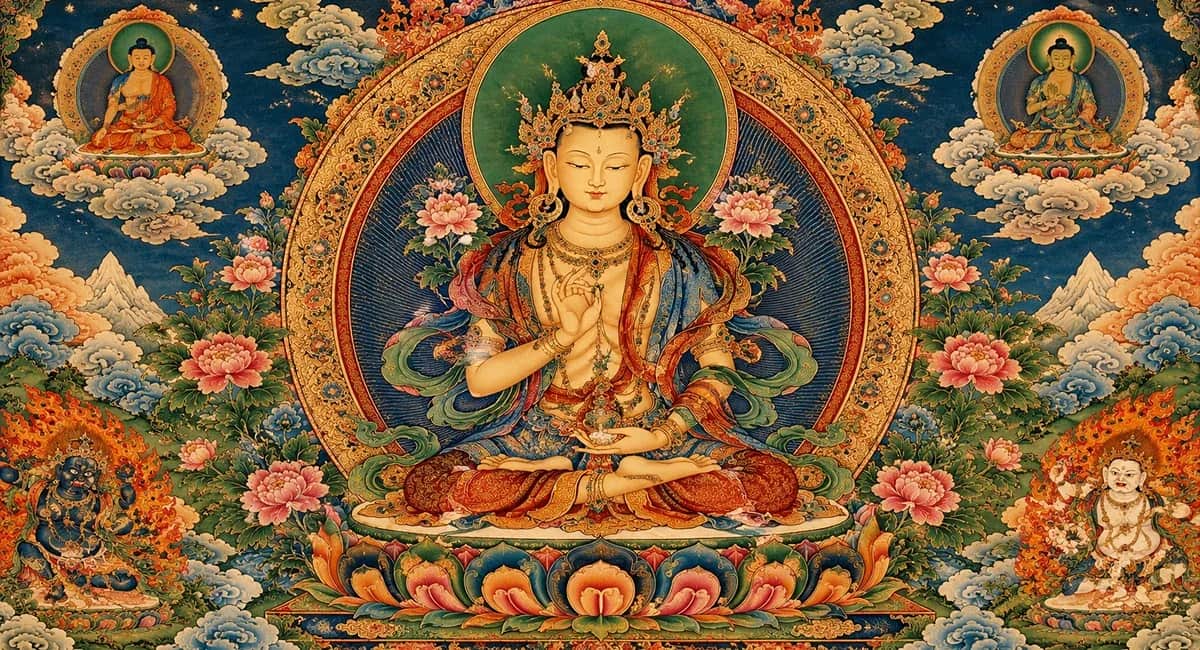
Tibetan Buddhist art is recognised for its detailed figures, vibrant colours, symbolic objects and carefully organised compositions. Among its most interesting features is the use of geometric patterns. Circles, squares, triangles, symmetrical arrangements and repeated designs are not simply decorative elements. In many traditional artworks, they help communicate spiritual ideas and create a visual structure for understanding sacred space.
The term sacred geometry in Tibetan Buddhist art is commonly used to describe the meaningful geometric forms and arrangements found in mandalas, ritual diagrams, temple designs, and traditional Thangka paintings. These patterns can express ideas about the universe, meditation, balance, and the relationship between the ordinary world and enlightened awareness.
One of the clearest examples is the Buddhist mandala, where circles and squares are arranged around a central figure or sacred space. By learning how these shapes work together, viewers can better understand the artistic and philosophical ideas behind Himalayan Buddhist art.
1. What Does Sacred Geometry Mean?
Sacred geometry refers to the use of geometric forms and organised patterns in religious, spiritual and symbolic art. Shapes such as circles, squares and triangles can communicate ideas beyond their basic appearance.
In Tibetan Buddhist traditions, geometric organisation is especially important in mandalas. Their carefully planned structures can represent a deity's sacred environment and provide a visual framework for meditation and ritual practice.
It is important to understand that not every geometric pattern in Buddhist art has one universal meaning. The interpretation depends on the particular mandala, deity, ritual tradition, and artistic context.
2. The Mandala: The Best-Known Example of Sacred Geometry
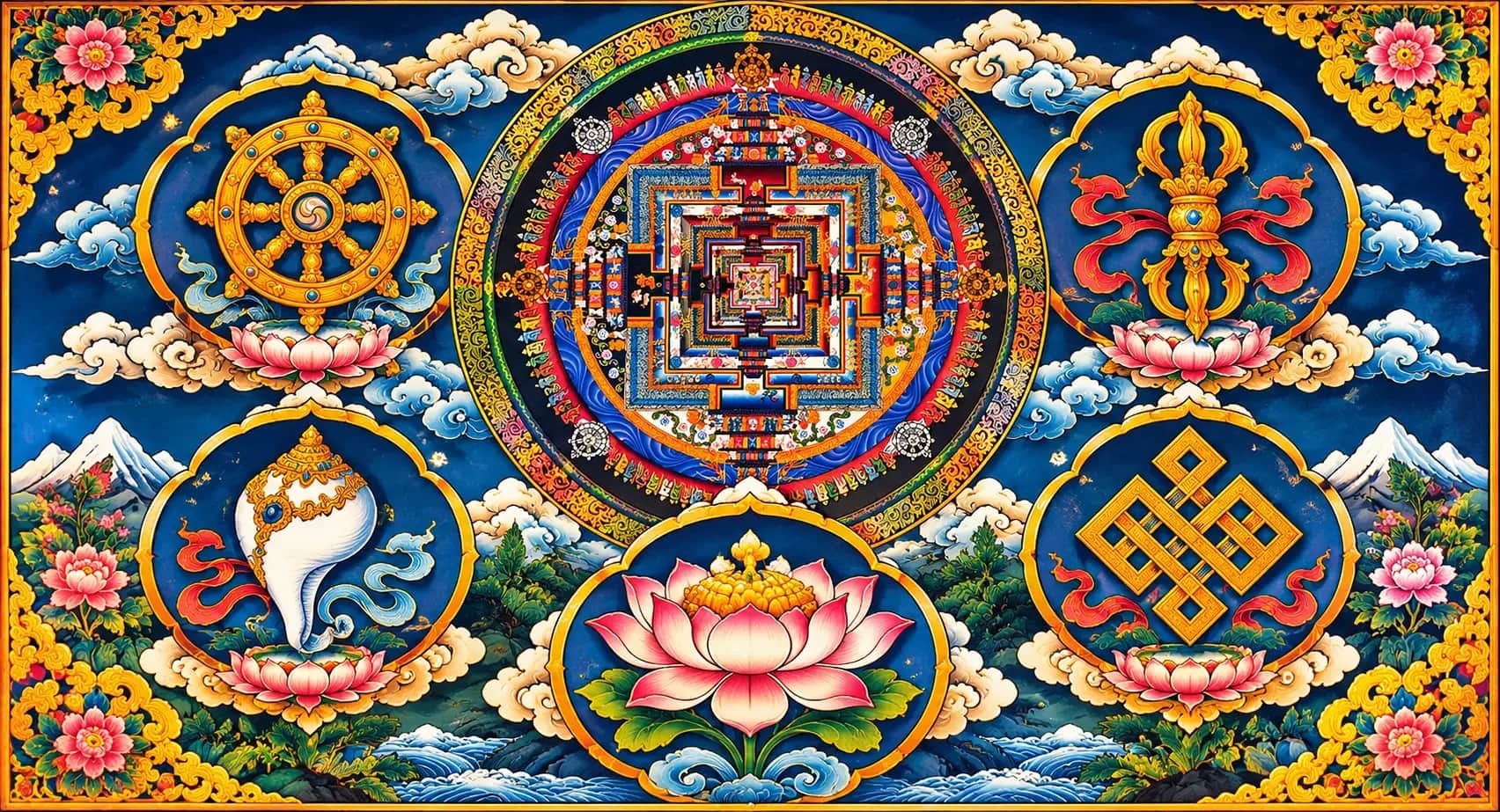
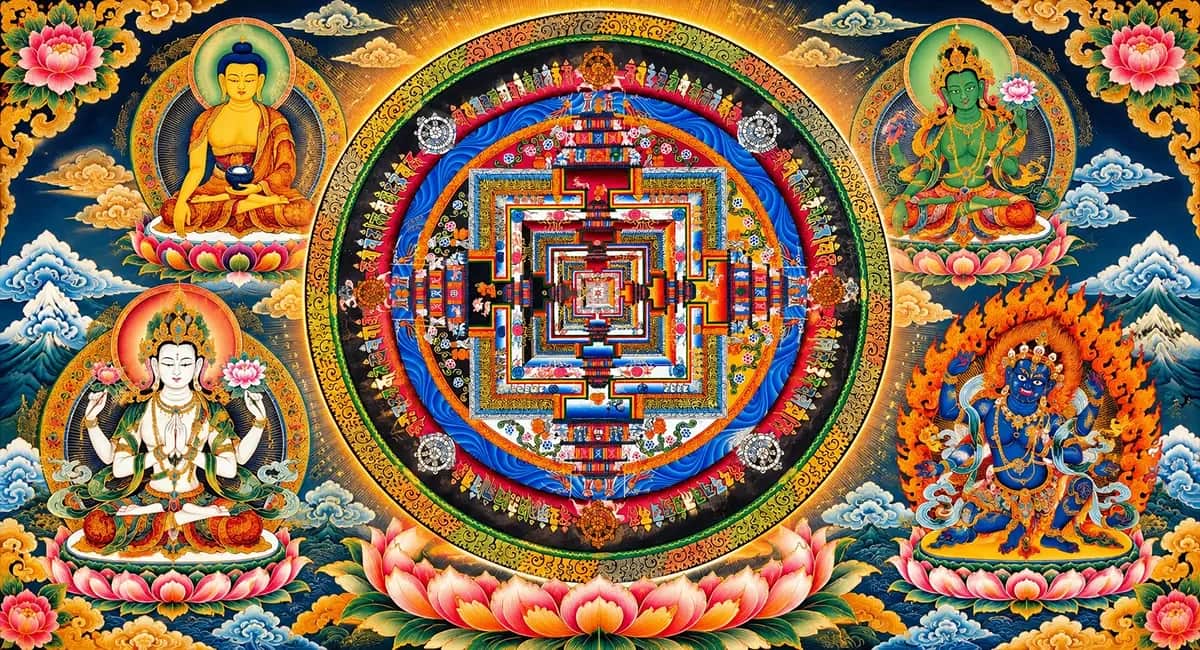
The mandala is one of the most recognisable geometric forms in Tibetan Buddhist art. The word is commonly translated as circle, and Buddhist mandalas often combine a central point, concentric circles, and a square structure.
In many Tibetan Buddhist mandalas, the central figure represents a particular deity. Around this figure is a carefully organised palace-like structure, often surrounded by additional rings, symbolic forms and protective boundaries.
The mandala is more than a symmetrical picture. It can serve as a visual support for meditation, visualisation and ritual practice. Practitioners may imagine the mandala as a three-dimensional sacred palace and mentally move through its different levels towards the central deity.
To see how these arrangements appear in historical Tibetan paintings, explore the Rubin Museum's mandala collection.
3. The Circle: Wholeness and the Structure of the Mandala
Circles are among the most important shapes in mandala compositions. They often appear as concentric rings surrounding the central sacred structure.
In Buddhist mandalas, these circular bands may define different symbolic zones or boundaries. Some mandalas include rings of lotus petals, protective flames, or other elements. Their exact meanings vary according to the specific design and ritual system.
The circular arrangement also creates a sense of continuity and visual movement. As the viewer looks from the outer edge towards the centre, attention is gradually drawn to the main figure or sacred focus.
Circles therefore help organise the composition while contributing to the mandala's symbolic and meditative function.
4. The Square: The Sacred Palace and Its Four Gates
A square is another important geometric element in Tibetan Buddhist mandalas. It frequently represents the plan of a sacred palace in which the principal deity resides.
Many mandalas show a square structure with four gateways facing the cardinal directions: north, south, east, and west. These entrances are often decorated with elaborate architectural details and symbolic motifs.
The four gates help create a balanced arrangement around the centre. They also provide a visual structure for understanding the mandala as a sacred environment rather than a flat decorative pattern.
In some traditions, the palace is visualised as a three-dimensional structure. The painted square becomes a symbolic ground plan of a sacred space.
5. The Centre Point: The Main Focus of the Mandala
The centre of a mandala is particularly important. It commonly contains the principal deity or a symbolic representation of the focus of the practice.
The surrounding structures are organised in relation to this central point. This arrangement creates a clear visual hierarchy, guiding the viewer's attention from the outer boundaries towards the centre.
The central figure may be a Buddha, Bodhisattva or meditational deity, depending on the mandala. Other figures may appear around it as part of the deity's retinue.
The centre is therefore not simply an artistic focal point. It plays a significant role in the religious and symbolic structure of the mandala.
6. Symmetry: Balance and Order in Buddhist Art
Symmetry is a defining feature of many Tibetan Buddhist mandalas. Important forms and figures are arranged in balanced positions around a central axis.
This organisation can be seen in the placement of gateways, directional figures, lotus petals, and surrounding circles. Repeated shapes help maintain consistency throughout the design.
Symmetry also makes complex compositions easier to understand visually. Even when a mandala contains numerous figures and decorative details, its underlying structure provides a sense of order.
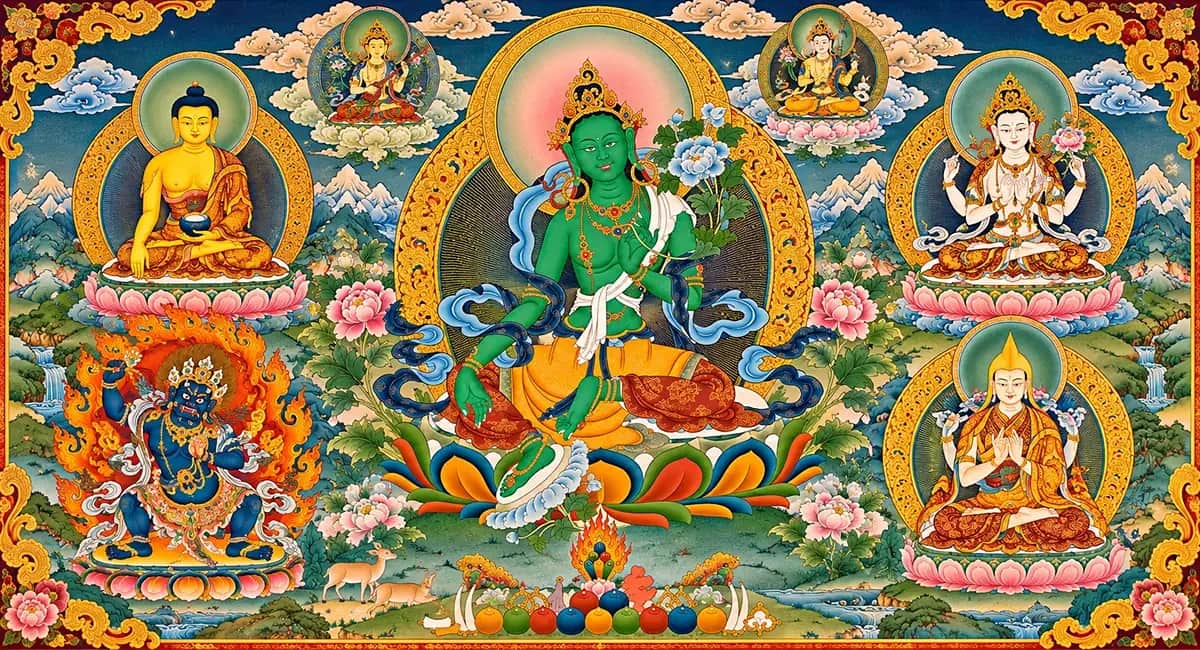
However, not every Tibetan Buddhist painting is perfectly symmetrical. Narrative scenes, devotional compositions and other forms of Thangka art may use different arrangements according to their subject.
7. Four Directions and Their Geometric Arrangement
The four cardinal directions are important in many mandala designs. The north, south, east, and west entrances create an organised structure around the central deity.
Different directions may be associated with particular deities, colours, symbolic qualities or ritual meanings. These associations depend on the mandala tradition and should not be treated as identical across all Buddhist artwork.
The directional arrangement helps transform the mandala into a symbolic map of sacred space. It gives each part of the composition a defined place within the whole design.
When viewing a traditional mandala, notice how the four sides relate to the centre and how the gates connect the inner and outer areas.
8. Lotus Patterns and Repeated Geometric Forms
Lotus petals frequently appear in mandalas and other forms of Tibetan Buddhist art. They may form a circular band around the central palace or serve as a throne for a sacred figure.
The lotus is widely associated with purity, spiritual development, and awakening in Buddhist art. When repeated in a geometric arrangement, its petals contribute to the visual balance and structure of the composition.
Other repeated forms may include small circles, decorative borders, interlocking patterns, and symmetrical motifs. These elements create rhythm and visual continuity while supporting the overall design.
Their meaning depends on their placement and relationship with the other parts of the painting.
9. Proportions and the Traditional Construction of Sacred Images
Geometric organisation is also important when artists create the figures within a Thangka painting. Traditional Tibetan Buddhist art uses established systems of proportion, often described through iconometric rules.
These guidelines help artists maintain recognised proportions for sacred figures. They may define relationships between the head, body, limbs, posture, and other features.
The purpose is not simply to make a figure look realistic. Traditional proportions help preserve established iconographic conventions and make the representation consistent with its religious subject.
The precise measurements can differ according to the type of figure and artistic tradition. This is one reason traditional Thangka painting requires careful study and practice.
Learn more about the artistic process in our guide to how a Thangka is painted.
10. Colours and Geometry: How Design and Symbolism Work Together
Geometry and colour often work together in Tibetan Buddhist mandalas. Different sections of a composition may use contrasting colours to distinguish directions, boundaries, figures and symbolic areas.
Some mandala systems associate colours with specific directions, deities or enlightened qualities. Other designs use colour to define protective rings, lotus petals and architectural structures.
The meaning of a colour should always be understood within its particular iconographic setting. A colour does not necessarily carry the same meaning in every painting.
The combination of colour and geometry helps viewers recognise the different layers of a mandala and appreciate its carefully organised design.
11. Sacred Geometry in Sand Mandalas
Sand mandalas are an especially striking example of geometric precision in Tibetan Buddhist practice. Monks create detailed designs using coloured sand, following carefully planned patterns and traditional instructions.
The process may involve drawing the layout, establishing the central structure, and gradually filling the different sections with intricate designs. The work can require considerable patience, concentration and cooperation.
Sand mandalas are associated with specific Buddhist rituals and practices. In some traditions, they are dismantled after completion, reflecting teachings about impermanence.
Their geometric structure is not random. Every section belongs to a larger design, and the finished mandala can be understood as a symbolic sacred environment.
12. How to Recognise Sacred Geometry in a Thangka Painting
You do not need to be an expert to begin recognising geometric elements in a Thangka. A careful look at the composition can reveal how the artwork is organised.
Start by looking for the main figure or central point. Notice whether circles or square structures surround it. Look for four directional entrances, repeated lotus petals, concentric bands, and symmetrical arrangements.
Next, examine the relationship between the figures and the geometric background. Ask whether the shapes form a palace, a protective boundary, or a decorative framework.
Finally, consider the painting's subject and tradition before assigning a specific meaning to each shape. For a broader introduction to interpreting figures, gestures, and visual elements, read our guide on how to read a Thangka painting.
13. Why Sacred Geometry Matters in Tibetan Buddhist Art
Sacred geometry connects artistic design with religious ideas and contemplative practice. It gives complex paintings an organised structure and helps communicate concepts through visual forms.
Mandalas are especially important because their geometric arrangements can serve as supports for visualisation and ritual practice. Their central figures, surrounding circles, square palaces, and directional entrances work together as parts of a meaningful whole.
These traditions also demonstrate the knowledge and discipline involved in Himalayan Buddhist art. Artists must understand not only painting techniques but also the iconographic conventions that guide the arrangement of sacred figures and symbols.
To explore how these artistic traditions developed over time, read our article on the history of Thangka painting.
Conclusion
Sacred geometry in Tibetan Buddhist art is a meaningful combination of shapes, proportions, patterns, and symbolic arrangements. Circles, squares, central points, symmetry and mandalas help create visual representations of sacred space and support different forms of Buddhist meditation and ritual practice.
Understanding these geometric elements makes traditional Thangka paintings more engaging to explore. Rather than seeing circles and squares as simple decorations, viewers can recognise how they contribute to the structure and meaning of the complete artwork.
Whether you are learning about Buddhist mandalas for the first time or developing a deeper interest in Himalayan art, sacred geometry offers a fascinating way to appreciate the thought, skill and tradition behind Tibetan Buddhist paintings.
Explore the Beauty of Traditional Tibetan Buddhist Art
Explore Our CollectionFrequently asked questions
Answers to the questions readers ask most about this topic.
Sacred geometry refers to meaningful geometric arrangements such as circles, squares, symmetry, and mandala patterns used to represent sacred space and spiritual ideas in Tibetan Buddhist art.
Mandalas are symbolic representations of sacred spaces and are used as supports for meditation, visualisation, and ritual practices in several Tibetan Buddhist traditions.
Circles often form concentric boundaries around the central sacred structure. They help organise the mandala and may represent different symbolic or protective zones.
The square often represents the plan of a sacred palace with four gateways facing the cardinal directions. The central deity is placed within this organised structure.
Symmetry creates visual balance and helps organise figures, gates, patterns, and other elements around a central point.
About the author: Nepathangka Editorial
Editorial Team
The Nepathangka editorial team writes about thangka painting, Buddhist iconography and Himalayan craft. We work with the painters and metalworkers in Nepal whose pieces we sell, and every guide is checked with the artisans before it goes live.