What Is a Buddhist Yidam? Understanding Meditational Deities in Thangka Art
By Nepathangka Editorial, Editorial Team
, 9 min read
Learn what a Buddhist Yidam is and explore the meaning of meditational deities in Tibetan Buddhist art. Discover their forms, symbolism, and importance in traditional Thangka paintings.
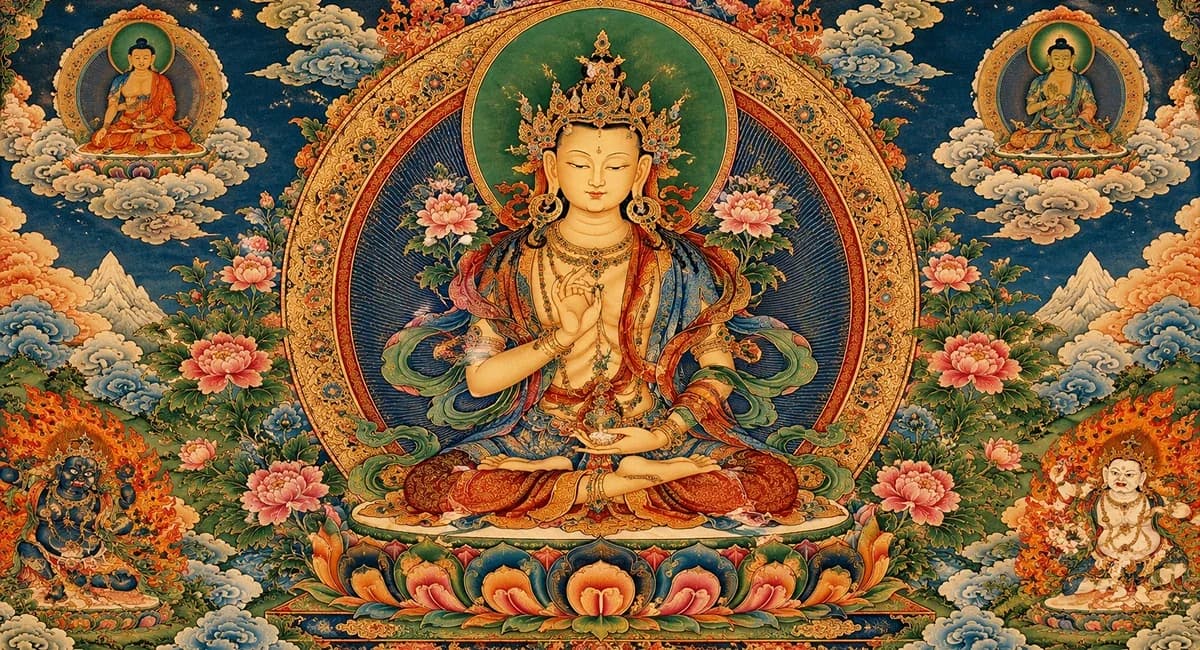
Yidams hold an important place in Tibetan Vajrayana Buddhism and its artistic traditions. These meditational deities represent enlightened qualities and serve as the focus of specific visualisation practices. In traditional Thangka paintings, their forms, gestures, colours, and symbolic objects communicate deep spiritual ideas. Understanding the meaning of a Yidam helps viewers appreciate the religious and artistic significance of Tibetan Buddhist artwork.
Tibetan Buddhist art is filled with beautifully detailed images of Buddhas, Bodhisattvas, teachers, and other sacred figures. Among these subjects are special meditational deities known as Yidams. Their appearances can be peaceful, powerful, or wrathful, and they often hold symbolic objects that communicate particular spiritual qualities.
A Yidam is more than a figure represented in a painting. In Vajrayana Buddhism, it is a meditational deity used as the focus of a specific spiritual practice. Through visualisation and other traditional methods, practitioners work with the qualities represented by the deity, such as wisdom, compassion, and enlightened awareness.
Traditional Thangka paintings provide an important visual representation of these deities. Their colours, postures, expressions, ornaments, and surrounding figures follow established iconographic traditions. Learning about Yidams can therefore help viewers understand both the spiritual ideas and artistic details found in Tibetan Buddhist art.
1. What Is a Buddhist Yidam?
The Tibetan term Yidam is commonly translated as a meditational deity, personal deity, or tutelary deity. It refers to an enlightened figure who serves as the focus of particular meditation practices in Vajrayana Buddhism.
A Yidam may appear in a peaceful, semi-peaceful, or wrathful form. These different appearances communicate various aspects of enlightened activity and spiritual qualities. For example, a peaceful figure may express compassion or wisdom, while a wrathful figure can symbolise the powerful activity associated with overcoming ignorance and obstacles.
A Yidam should not simply be understood as an ordinary god who grants wishes. In Vajrayana practice, the deity represents enlightened qualities that a practitioner works to realise through structured meditation and visualisation.
The choice of Yidam and practice methods depends on the Buddhist lineage, teachings, and instructions from a qualified teacher.
2. The Role of Yidams in Tibetan Vajrayana Buddhism
Yidams have a central role in many Vajrayana Buddhist traditions. Vajrayana, often called the Diamond Vehicle, includes specialised methods that combine meditation, visualisation, mantra recitation and ritual practice.
One of these methods is known as deity yoga. In this practice, a practitioner follows a traditional meditation system centred on a particular Yidam. The process may involve visualising the deity, contemplating its qualities, reciting associated mantras and following specific instructions.
The purpose is not merely to imagine a beautiful divine figure. Deity yoga is intended to transform ordinary patterns of perception and help practitioners develop a deeper understanding of enlightened qualities.
These practices are part of a structured spiritual tradition. Specific Yidam practices may require empowerment, guidance, and instructions from a qualified Vajrayana teacher.
3. How Yidams Are Represented in Thangka Paintings
Thangka paintings are among the most recognisable artistic expressions of Tibetan Buddhism. They often portray Yidams in carefully arranged compositions that follow traditional iconographic guidelines.
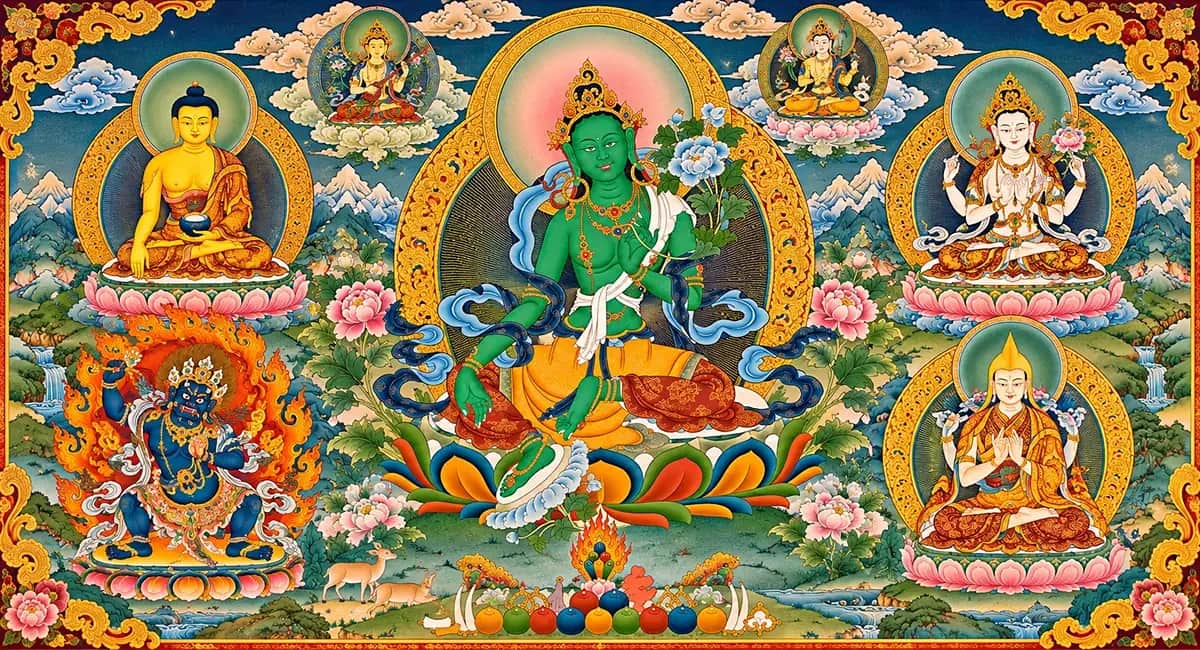
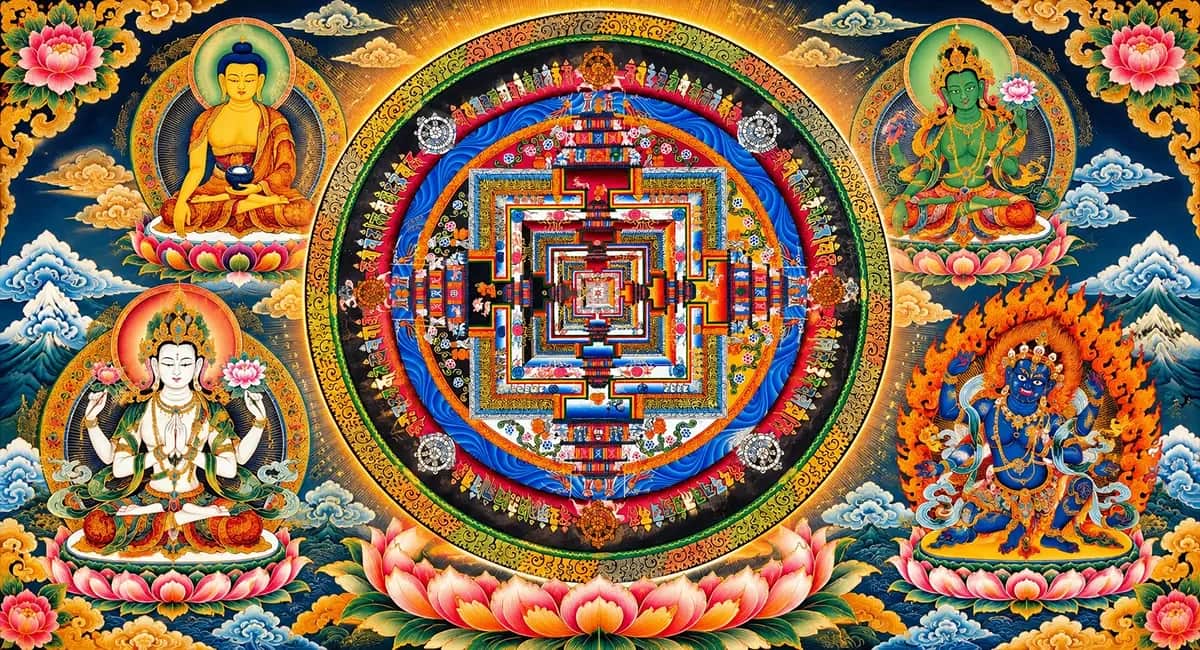
The central deity is usually the main focus of the painting. Around it, artists may include a mandala, attendant figures, symbolic objects, lotus seats, decorative patterns, and other elements related to the deity's practice.
Each detail contributes to the meaning of the image. A deity's hand gestures, facial expressions, posture, ornaments, and attributes can help identify the figure and communicate its spiritual qualities.
Thangkas also serve as visual supports for devotion, teaching, and meditation. Their significance therefore goes beyond their appearance as works of art.
You can learn more about the traditional techniques and stages involved in their creation in our guide to how a Thangka is painted.
4. Peaceful Yidams: Representations of Compassion and Wisdom
Some Yidams appear in peaceful forms. These figures often have calm expressions, balanced postures, and elegant ornaments. Their visual appearance communicates qualities such as compassion, wisdom, clarity, and loving-kindness.
A peaceful appearance does not mean that the deity is less powerful or spiritually significant. Instead, it expresses a particular way of representing enlightened qualities.
Examples of figures that may serve as meditational deities in Vajrayana traditions include forms of Avalokiteshvara, also known as Chenrezig, and Manjushri.
Avalokiteshvara is strongly associated with compassion, while Manjushri represents wisdom. Their visual forms often include recognisable attributes that help viewers understand their symbolism.
In Thangka paintings, these figures may appear seated on lotus thrones, surrounded by halos or accompanied by symbolic objects.
5. Wrathful Yidams: Powerful Forms of Enlightened Activity
Wrathful Yidams are among the most visually striking subjects in Tibetan Buddhist art. They may have fierce expressions, multiple arms, several heads, flaming halos, and elaborate ornaments.
These appearances can seem frightening to someone unfamiliar with Vajrayana symbolism. However, their wrathful forms are not generally intended to represent ordinary anger or harmful aggression.
Instead, they symbolise powerful enlightened activity directed towards overcoming ignorance, attachment and other obstacles on the path to awakening.
Important examples include Chakrasamvara, Hevajra and Vajrayogini, each associated with particular Vajrayana practice traditions.
Their visual forms can include symbolic weapons, ritual implements, and complex arrangements of figures. Understanding these details requires attention to the specific deity and its iconographic tradition.
6. Common Symbols Found in Yidam Thangka Paintings
The objects and visual details shown with a Yidam are important parts of its representation. Some common elements include:
The Vajra
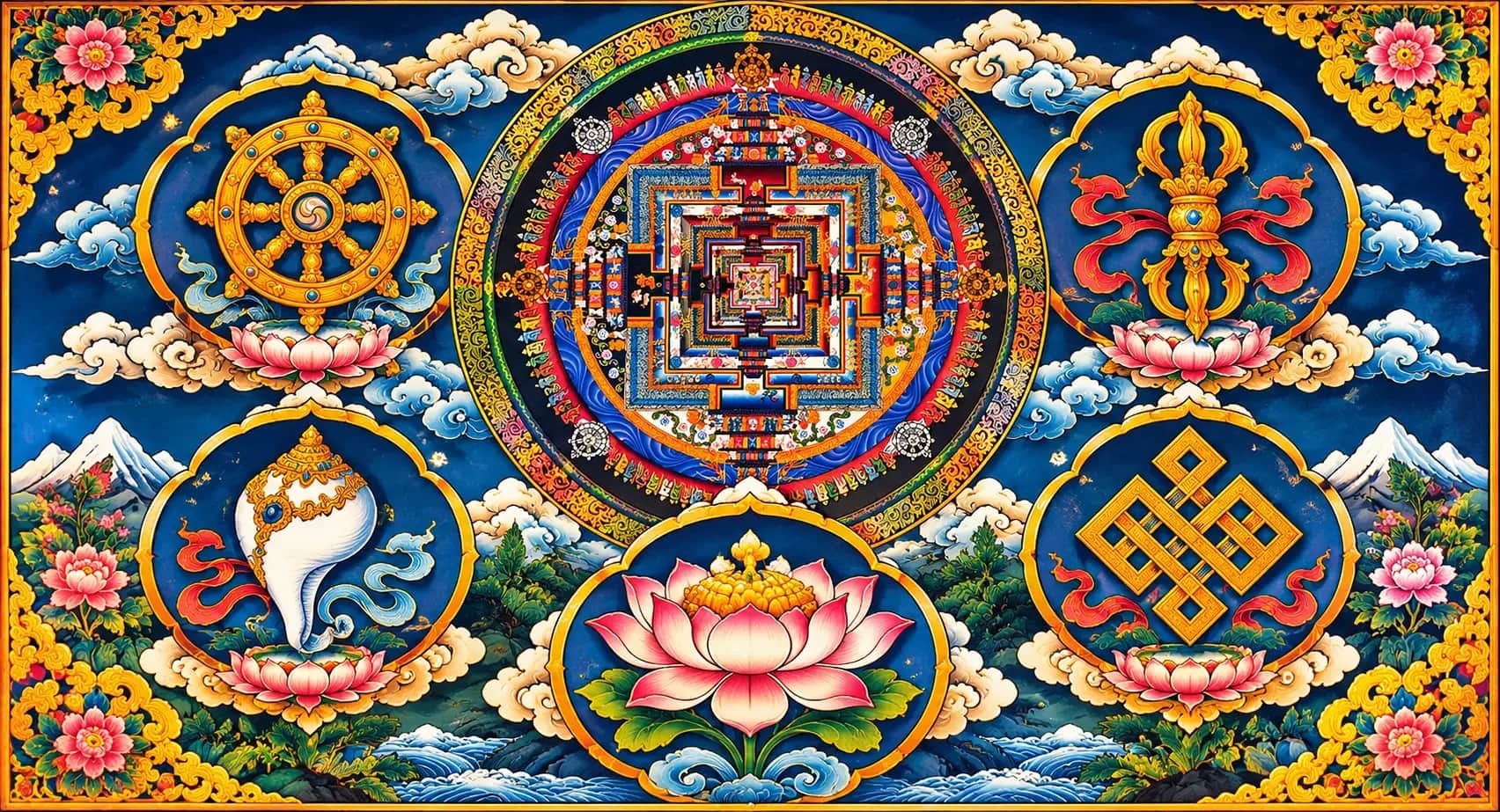
The vajra, known as a dorje in Tibetan, is associated with indestructible spiritual power and wisdom. It appears in the hands of several Vajrayana deities and is also an important ritual object.
The Bell
The ritual bell is commonly associated with wisdom. In Vajrayana symbolism, it is frequently paired with the vajra to express complementary aspects of spiritual practice.
The Lotus Throne
The lotus is widely associated with purity and spiritual development. A Yidam seated on a lotus throne is represented within a sacred visual setting.
The Halo and Aureole
Halos and surrounding circles of light help distinguish sacred figures within a composition. In some paintings, flames or elaborate decorative borders also surround the deity.
The Mandala
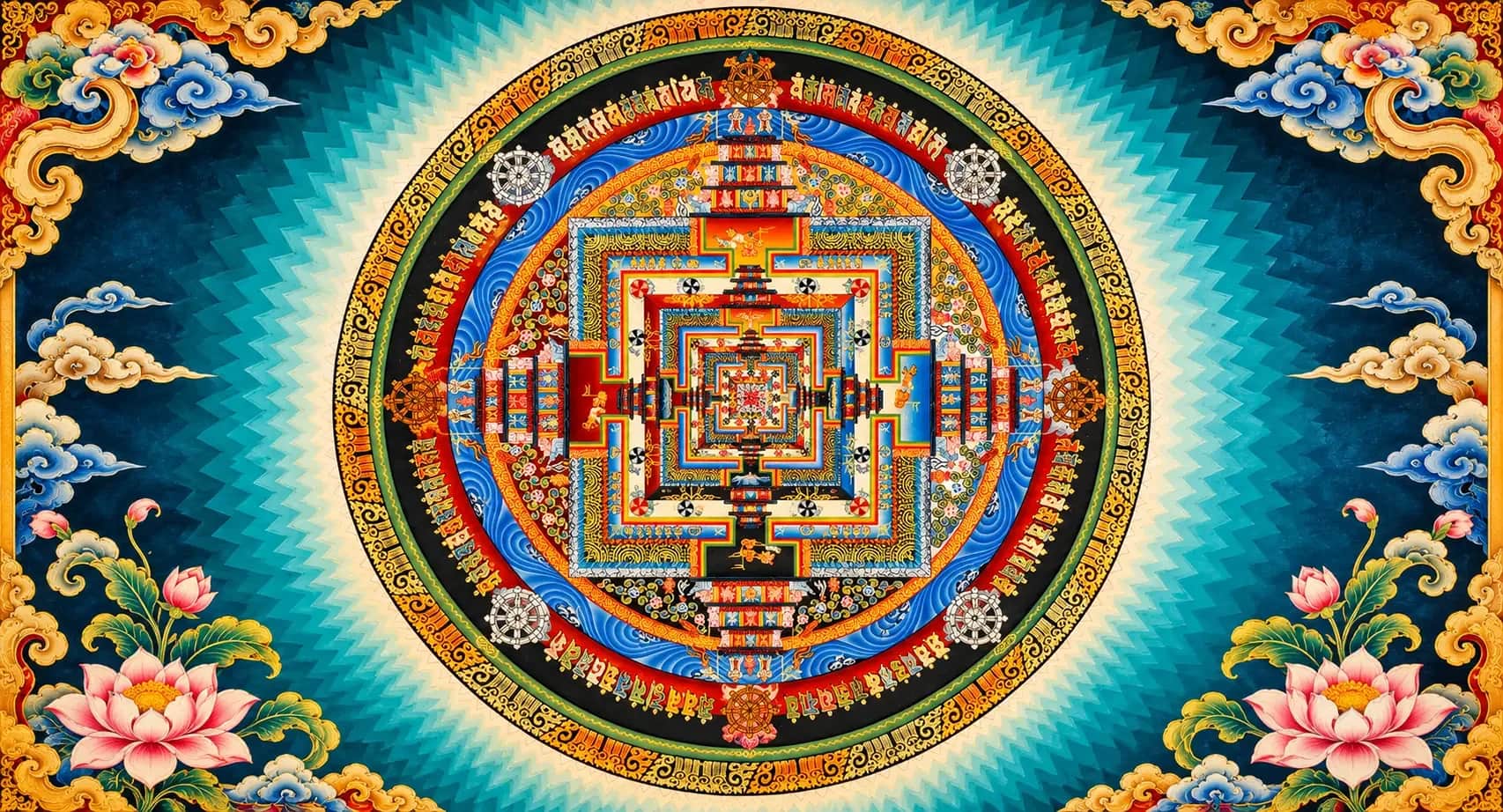
A mandala may surround or contain the central Yidam. It represents an organised sacred environment and can be an important part of the deity's ritual and meditation context.
The exact meaning of these objects depends on the deity and the tradition in which the painting was created.
7. Why Do Some Yidams Have Multiple Heads and Arms?
Many Tibetan Buddhist deities are depicted with more than one head or pair of arms. These features are symbolic rather than realistic descriptions of physical bodies.
Multiple arms can represent different enlightened activities or the ability to express several qualities at once. Each hand may hold a particular object associated with the deity.
Multiple heads may communicate different aspects of awareness, wisdom, or enlightened activity. Their colours and expressions can also carry specific iconographic meanings.
For example, Hevajra is represented with multiple heads and arms in traditional images. His detailed appearance is connected to the teachings and visual conventions of the Hevajra Tantra.
It is important not to assign a universal meaning to every extra head or arm. The interpretation should follow the particular deity's iconographic tradition.
8. Famous Yidams in Tibetan Buddhist Art
Several meditational deities are particularly well known in Tibetan Buddhist artistic traditions.
Chakrasamvara
Chakrasamvara is an important meditational deity in Vajrayana Buddhism. His iconography is complex and often includes multiple symbolic attributes and a consort. His representation is associated with advanced tantric practice traditions.
Hevajra
Hevajra is a prominent Yidam associated with the Hevajra Tantra. He is commonly represented in a dynamic form with multiple heads and arms, holding ritual objects that are significant within his iconography.
Vajrayogini
Vajrayogini is a female meditational deity whose imagery often includes a dynamic posture, symbolic implements, and distinctive ornaments. She is an important figure in several Tibetan Vajrayana practice lineages.
Avalokiteshvara (Chenrezig)
Avalokiteshvara is associated with compassion and appears in several forms across Buddhist traditions. Certain forms are used as meditational deities in Tibetan Buddhism.
Manjushri
Manjushri represents wisdom and is commonly shown holding a sword associated with cutting through ignorance and a text connected with the perfection of wisdom.
These figures demonstrate the diversity of Yidam imagery in traditional Buddhist art. Their representations vary according to the specific practice, lineage, and iconographic system.
9. How to Identify a Yidam in a Thangka Painting
Identifying a Yidam requires looking at several features rather than relying on one visual detail.
Begin with the central figure. Observe its posture, facial expression, number of heads and arms, and the objects held in its hands. These features may provide important clues about the deity.
Next, examine the surrounding composition. A mandala, attendant figures, a consort, a particular throne, or distinctive ornaments can help narrow down the identification.
Colours can also provide useful information, but they should not be interpreted in isolation. Different deities may share colours or symbolic objects.
For a more detailed approach to understanding sacred figures, gestures and composition, read our article on how to read a Thangka painting.
10. Are Yidams the Same as Buddhas and Bodhisattvas?
Yidam is a term describing a role within a particular meditation practice, rather than a separate category of ordinary gods.
A figure such as a Buddha or Bodhisattva may serve as a Yidam in a specific Vajrayana practice tradition. However, not every Buddha or Bodhisattva image is automatically being presented as a Yidam.
Likewise, protective deities have distinct roles within Tibetan Buddhist traditions. Some figures may have more than one function, but the terms Yidam and protector should not be treated as interchangeable.
Understanding this distinction helps viewers interpret Thangka paintings more accurately and appreciate the different roles represented in Tibetan Buddhist art.
11. The Importance of Yidam Paintings in Tibetan Buddhist Culture
Yidam paintings preserve important visual traditions and communicate complex religious ideas through carefully designed images.
Artists follow established proportions, colours, attributes, and arrangements to create representations that are consistent with particular Buddhist teachings. These conventions are passed down through artistic and religious lineages.
For practitioners, a Thangka depicting a Yidam can function as a support for meditation and ritual practice. For students and art enthusiasts, it provides an opportunity to study Buddhist iconography, traditional painting techniques, and Himalayan cultural heritage.
The history of these artistic traditions is closely connected with the development of Tibetan Buddhism. Explore our guide to the history of Thangka painting to learn more about this heritage.
12. Appreciating Yidam Art with Cultural Understanding
Yidam paintings often contain imagery that may be unfamiliar to people seeing Tibetan Buddhist art for the first time. Peaceful figures, wrathful expressions, multiple arms, symbolic objects, and elaborate mandalas all have specific meanings within their religious contexts.
A thoughtful approach is to learn the identity of the central deity, understand its associated symbols, and consider the Buddhist tradition behind the artwork.
It is also important to respect that some images represent practices intended for trained practitioners. Their meaning cannot always be understood fully from appearance alone.
By approaching these paintings with curiosity and cultural respect, viewers can appreciate both their artistic craftsmanship and spiritual significance.
Conclusion
A Buddhist Yidam is a meditational deity that plays an important role in Tibetan Vajrayana traditions. Through visualisation and other structured practices, practitioners work with the enlightened qualities represented by these figures.
In Thangka art, Yidams are portrayed through distinctive colours, gestures, postures, symbolic objects, and carefully arranged compositions. Peaceful and wrathful forms, mandalas and detailed iconographic features all contribute to their meaning.
Understanding Yidams offers a deeper appreciation of Tibetan Buddhist art. It reveals how traditional Thangka paintings connect visual beauty, religious teachings, and centuries of artistic knowledge.
Discover the Spiritual Meaning of Traditional Thangka Art
Explore Our CollectionFrequently asked questions
Answers to the questions readers ask most about this topic.
A Yidam is a meditational deity in Vajrayana Buddhism. It serves as the focus of specific meditation and visualisation practices and represents enlightened qualities.
A Yidam provides a focus for structured spiritual practices through which practitioners contemplate and work with qualities such as wisdom, compassion, and enlightened awareness.
Yidams are not simply understood as ordinary gods who grant wishes. They are enlightened figures used in specific Vajrayana meditation practices.
Peaceful forms commonly express qualities such as compassion and wisdom, while wrathful forms symbolise powerful enlightened activity directed towards overcoming ignorance and obstacles.
Examples include Chakrasamvara, Hevajra, and Vajrayogini. Certain forms of Avalokiteshvara and Manjushri may also serve as meditational deities.
About the author: Nepathangka Editorial
Editorial Team
The Nepathangka editorial team writes about thangka painting, Buddhist iconography and Himalayan craft. We work with the painters and metalworkers in Nepal whose pieces we sell, and every guide is checked with the artisans before it goes live.